Removing Form CC-305 from a candidate portal is not a compliance program.
The 2026 Section 503 final rule changes what covered U.S. federal contractors and subcontractors must ask, calculate, and report. But the most consequential work sits beneath the form: applicant tracking system fields, onboarding rules, HRIS tables, vendor data feeds, interview prompts, model inputs, accommodation routes, reports, and archived templates.
The U.S. Department of Labor (DOL) removed the Section 503 requirement to invite applicants and employees to self-identify disability. It also removed the related applicant-and-hire computations and the 7% utilization goal and analysis. Most of the rule took effect on September 21, 2026. DOL estimated that 29,904 contractor parent companies would need HRIS updates, using 10 hours per company for its burden calculation. That is an estimate, not a promise that the work is small. The rule's own examples show that accessibility, accommodation, outreach, and audit evidence still matter . Separately, GAO reported that 532 audits from fiscal years 2017 through 2025 found Section 503 violations and called for clearer contractor guidance.
For senior leaders, the practical question is no longer “Do we still need the form?” It is: Can we remove an obsolete data path without removing equal access or leaving disability information inside automated hiring decisions?
Important: This article offers an operating framework, not legal advice. Confirm coverage, contract terms, retention duties, and the interaction with the ADA, state law, privacy law, and other requirements with qualified counsel.
What Changed Under Section 503 in 2026?
The final rule removes three prominent requirements from the Section 503 regulations:
- The requirement to invite applicants and employees to self-identify disability.
- The related computations concerning applicants and hires with disabilities.
- The 7% utilization goal and annual utilization analysis.
It did not repeal Section 503. Covered contractors still have nondiscrimination and affirmative-action duties. Reasonable-accommodation obligations remain. Contractors that meet the written affirmative action program (AAP) threshold still need an audit and reporting system and must continue to review and document the effectiveness of external outreach and recruitment efforts. The rule now clarifies that specified quantitative counts of referrals, applicants, and hires with disabilities are not required for those evaluations. The final regulatory text retains the annual documented outreach review .
The scope threshold also changed. The rule says basic nondiscrimination and recordkeeping requirements apply to contractors with a government contract in excess of $20,000. The written AAP requirement continues to apply to contractors with 50 or more employees and a federal contract or subcontract of $50,000 or more.
Do not decide scope from a company label. The rule applies by reference to covered federal contracts and subcontracts , not simply nonprofit status, European ownership, or receipt of federal funding. A grant alone is not the contract described by this rule, but a nonprofit or European-owned organization may separately hold a covered contract or subcontract through a U.S. entity or operation. Map the actual contracting relationships and covered establishments with counsel.
The Eight Hiring-System Controls
Confirm Scope, Ownership, and Effective Dates
Start with a signed scope decision, not a ticket to remove a field.
Create a register of relevant federal contracts and subcontracts, values, employing entities, establishments, employee counts, contract clauses, and system owners. Name one accountable executive and one operational owner across HR, legal, procurement, IT, accessibility, privacy, and talent acquisition.
Your control evidence should answer:
- Which entities and establishments are covered?
- Which systems serve covered and non-covered populations?
- Where do common global workflows create U.S.-specific behavior?
- Which requirement or approved business purpose supports every remaining sensitive field?
- Who can authorize a change, exception, or rollback?
This matters for European groups and shared-service organizations. A global ATS configuration can affect U.S. candidates even when it is administered elsewhere. Conversely, a U.S. rule change is not a reason to overwrite lawful local processes without a jurisdiction-by-jurisdiction review.
Retire the Former Section 503 Inquiry by Employment Stage
Find every place where the former Section 503/CC-305 process appears. The obvious candidate portal is only the beginning. Then classify each occurrence as pre-offer, post-offer, or employee-stage and obtain an approved legal basis for any inquiry that remains. The final rule removes the Section 503 mandate; it does not create one undifferentiated rule for every disability-related inquiry. DOL's discussion states that pre-offer disability inquiries are restricted by the ADA, while post-offer and employee inquiries require separate analysis under applicable law.
Inspect:
- Career sites and mobile application flows.
- ATS questionnaires and knockout rules.
- Recruiting chatbots and AI interview scripts.
- Pre-offer and post-offer workflows.
- Onboarding packets and e-signature templates.
- Employee resurvey campaigns.
- Candidate relationship management systems.
- Vendor-hosted forms, APIs, webhooks, and flat-file feeds.
- Data-warehouse transformations, dashboards, and scheduled reports.
- Localized copies, PDF packets, email templates, and archived requisitions.
Record the version, owner, retirement or approval decision, effective date, test evidence, and downstream effect for every change. Disable the former mandated workflow where counsel confirms it no longer has a valid basis before deleting its history. Historical records may still be subject to retention schedules, litigation holds, recordkeeping duties, or privacy requests.
The governing question is not “Can we hide the field?” It is “For this employment stage, what lawful purpose supports requesting, using, copying, or retaining it now that Section 503 no longer supplies the requirement?”
Separate Accommodation From Evaluation
Candidates still need a clear way to request an accommodation at every relevant stage. DOL specifically points to clear, welcoming instructions and examples of reasonable accommodations as a way to remove barriers without a general disability inquiry.
Build the accommodation path as a separate service channel:
- Make it easy to find before scheduling or starting an assessment.
- Offer more than one contact method.
- Route requests to trained, authorized staff.
- Share only the operational adjustment needed by interviewers or system administrators.
- Keep diagnoses and unrelated medical detail out of interview prompts, transcripts, scorecards, malpractice signals, and ranking features.
- Provide an equivalent alternative when the default format cannot be adjusted effectively.
- Define response times, escalation, and confirmation to the candidate.
Separation is both a privacy control and a decision-quality control. An interviewer may need to know that additional time or an alternate channel is approved. The interviewer does not need the candidate's diagnosis to evaluate job-relevant evidence.
Minimize and Isolate Disability Data
Removing a question does not remove the data already produced by it.
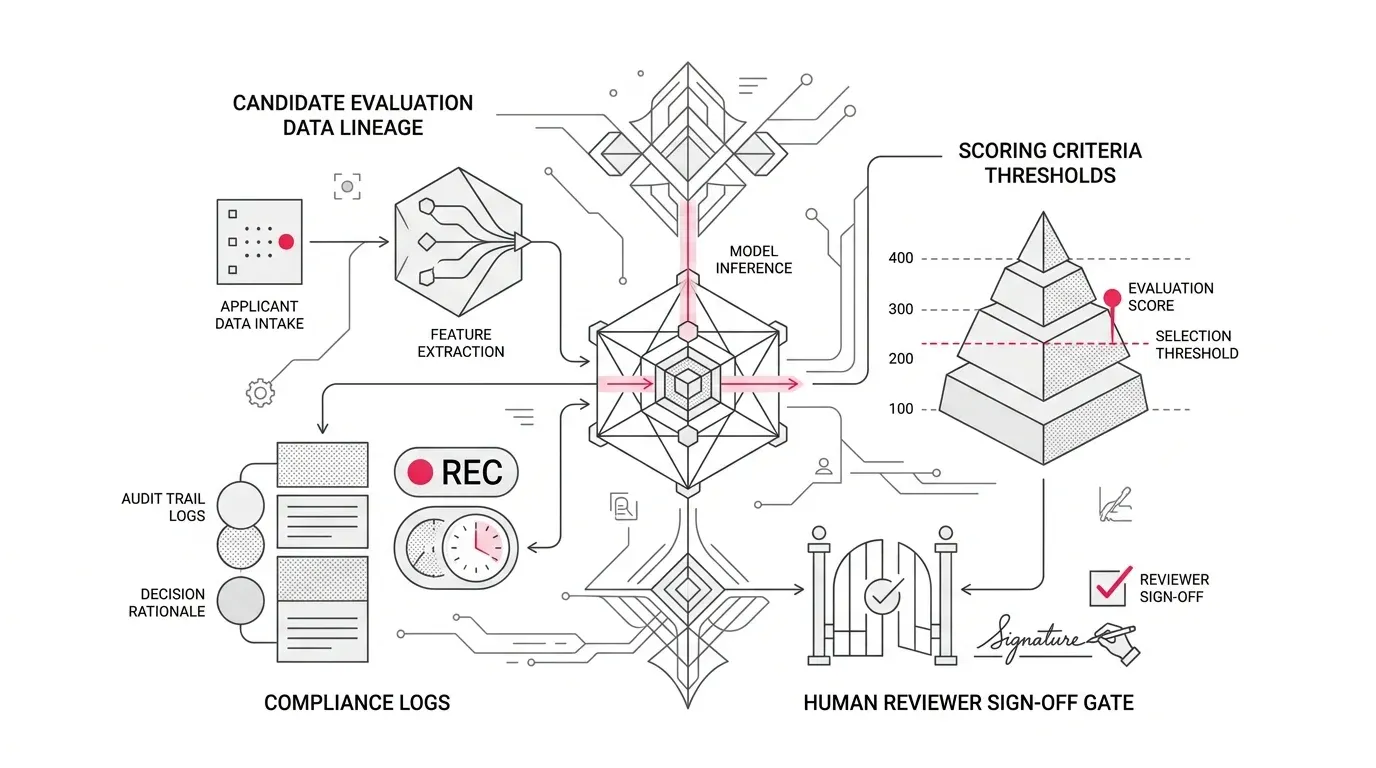
Create a lineage map from collection to deletion. Include databases, analytics platforms, backups, test environments, model-training stores, support tickets, recordings, transcripts, exports, and third-party systems. For each location, document:
- The data elements present.
- The purpose and legal basis.
- The system and business owner.
- Who can read, change, export, or delete them.
- The retention rule and disposal method.
- Whether the field reaches scoring, ranking, fraud detection, or model improvement.
Do not conduct a bulk purge without review. Instead, freeze new collection where required, restrict access, remove inappropriate downstream use, apply approved retention rules, and verify that deletion propagates when deletion is authorized.
This is also the moment to test derived data. A free-text transcript, recruiter note, audio recording, or automated summary may reveal a disability even when no structured disability field exists. Treat unsolicited disclosure as sensitive information and prevent it from becoming a scoring proxy.
Test the Accessibility of the Whole Hiring Task
DOL's final-rule discussion identifies accessible online applications, assessments, and hiring platforms, including use with screen readers and voice-to-text tools, as a way to support equal opportunity. Accessibility testing therefore belongs in the release gate, not in a policy appendix.
Test representative end-to-end tasks:
- Find a role, review essential requirements, and apply using a keyboard and screen reader.
- Request an accommodation without completing the assessment first.
- Schedule, reschedule, and join an interview using assistive technology.
- Understand spoken questions through captions or an approved alternative.
- Respond when speech, hearing, mobility, vision, cognitive, or fatigue-related needs affect the default interaction.
- Recover from timeouts, interruptions, disconnections, and misunderstood speech.
- Receive the same material information and a comparable chance to demonstrate job-relevant ability in the alternative route.
An accessible interface is necessary, but it is not sufficient. The assessment content, time limits, scoring criteria, fallback process, and human support must also be appropriate for the job and the candidate's approved adjustment.
Replace the Old Metric With Better Evidence, Not a New Quota
The former 7% utilization goal is gone. That does not justify an empty dashboard.
For contractors subject to the written AAP requirements, the revised rule retains an annual review of external outreach and recruitment. Those contractors must document the criteria used, reach a reasonable conclusion about effectiveness, and use alternative efforts when the totality of activity is ineffective. The rule says they are not required to use the former quantitative disability referral, applicant, and hire counts for this purpose.
Build a defensible evidence set around process and access. Depending on counsel and local law, it may include:
- Accessibility defects found, severity, remediation time, and retest status.
- Accommodation-request response time and resolution outcome, reported without exposing medical detail.
- Whether outreach partners received suitable, current vacancies.
- Attendance, referral quality, and follow-through from outreach activities using lawfully available information.
- Candidate drop-off at each stage, investigated for process barriers without guessing disability status.
- Alternative-format availability and completion.
- Hiring-manager training completion and observed control failures.
- Documented review of job descriptions for nonessential physical or mental requirements.
The rule itself points to skills-based barrier analysis, accessible hiring systems, accommodation practices, and outreach partnerships. Use evidence that shows whether the process removes barriers; do not invent a replacement utilization target.
Put AI Interview Scores Behind a Human-Controlled Boundary
AI interview products can standardize early-round evidence, but the system boundary matters more after this change.
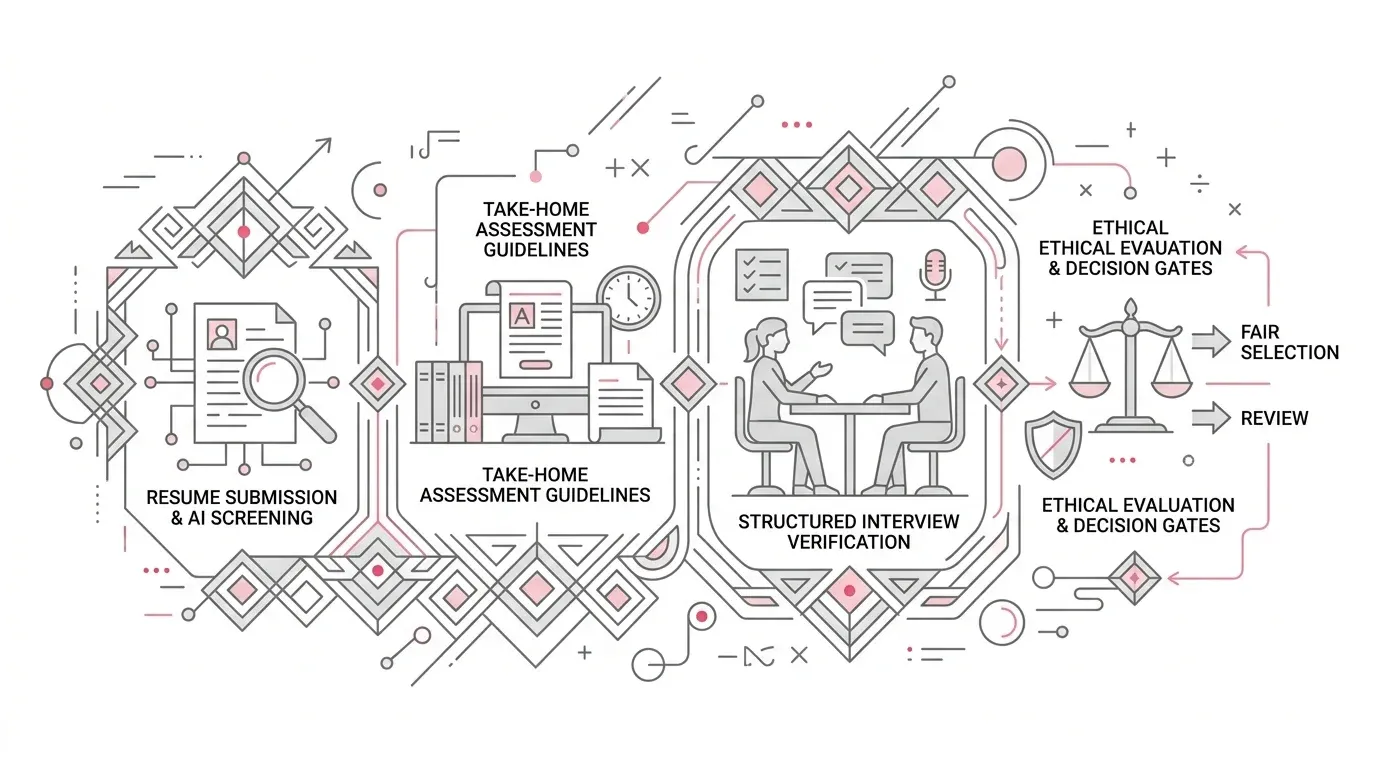
YuniQ Hired is designed to parse a job description into evaluation criteria and tailored behavioral questions, conduct real-time voice interviews, and produce structured scorecards and recommendations with human-readable justification. In a covered contractor's workflow, those capabilities should operate under explicit constraints:
- Score only published, job-related criteria.
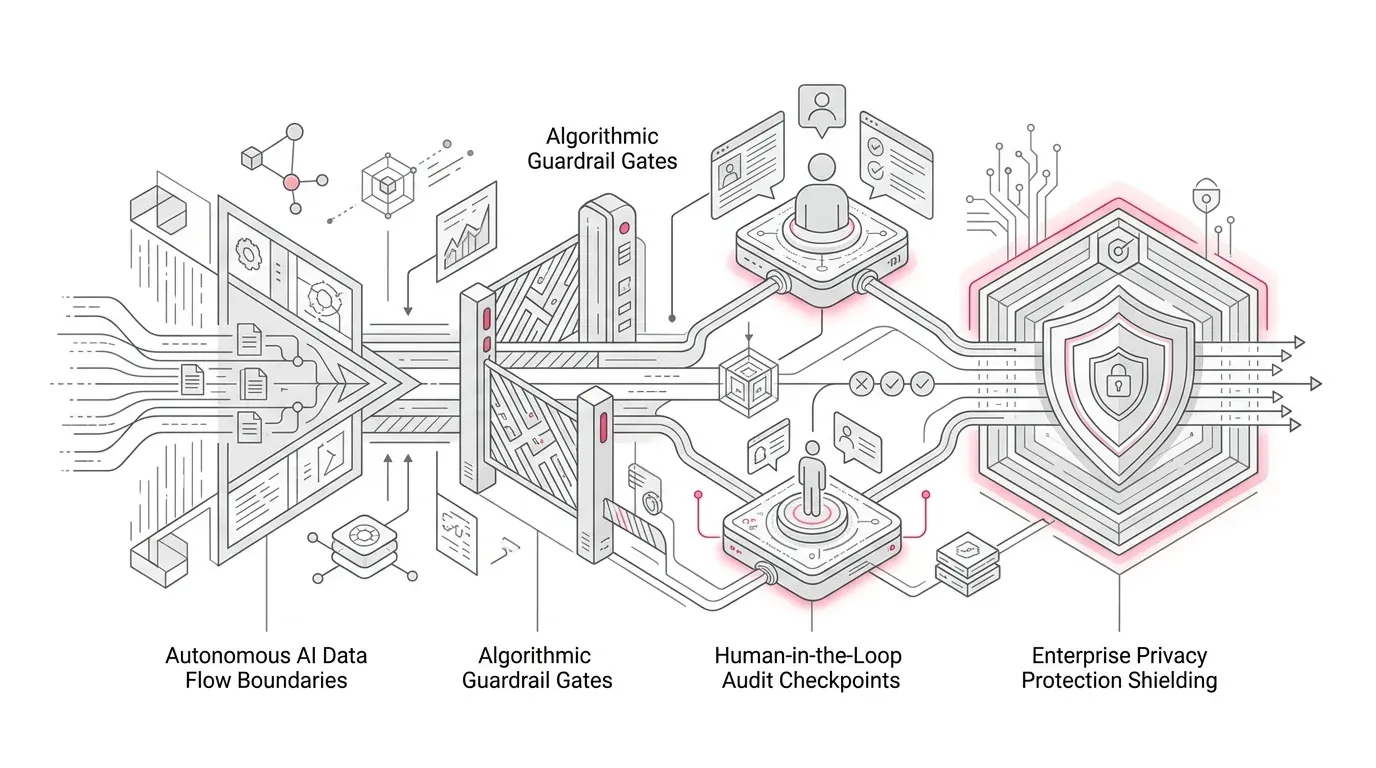
- Exclude accommodation requests, disability disclosures, medical information, and protected process notes from prompts and scores.
- Preserve the question, candidate response, criterion, provisional score, explanation, model/version information, and reviewer action.
- Require a trained person to review consequential recommendations and the supporting evidence.
- Give reviewers a visible “insufficient evidence” outcome rather than forcing a low score.
- Route accessibility or accommodation failures for remediation, not candidate penalty.
- Test whether speech differences, assistive technology, approved extra time, or alternate formats change scoring for equivalent job-relevant content.
- Define stop conditions for unexplained score shifts, inaccessible sessions, missing evidence, or unauthorized data exposure.
For a deeper governance model, see YuniQ's guidance on a reconstructable AI hiring audit trail and meaningful human oversight .
Update Vendor Contracts, Change Controls, and Audit Evidence
The final control makes the first seven durable.
Update data-processing instructions, field maps, configuration schedules, acceptance tests, retention terms, subcontractor controls, accessibility commitments, incident notification, and audit rights. Require vendors to identify where the former field exists and confirm the deployed configuration rather than sending a generic compliance statement.
Maintain an evidence pack containing:
- The legal and operational scope decision.
- An inventory of affected systems and vendors.
- Approved requirements and data-flow diagrams.
- Before-and-after screenshots or configuration exports.
- Accessibility and alternative-path test results.
- Accommodation-process tests.
- Model, prompt, rubric, and scorecard validation records.
- User acceptance, defect, remediation, and retest evidence.
- Training completion and operating procedures.
- Release approval, rollback plan, and post-release monitoring.
Legacy integrations deserve special attention. A removed front-end question may still feed a warehouse or remain embedded in a custom onboarding workflow. Where that code is poorly documented, modernizing the embedded hiring workflow may be safer than layering another exception onto it.
A 90-Day Implementation Plan
Days 1–15: Establish Control
- Confirm covered entities, establishments, contracts, and thresholds with counsel.
- Freeze new changes to the affected fields and reports.
- Inventory systems, vendors, forms, scripts, data stores, and owners.
- Separate accommodation operations from candidate evaluation.
- Approve the future-state requirements and decision rights.
Days 16–45: Remove and Reconfigure
- Retire or reauthorize each former Section 503 inquiry by employment stage and approved legal basis.
- Update integrations, reports, documentation, localized variants, and vendor instructions.
- Restrict historical data and remove inappropriate scoring or analytics use.
- Rewrite candidate notices and accommodation instructions.
- For entities subject to the written AAP requirements, define replacement outreach-effectiveness evidence and review criteria.
Days 46–75: Test the Real Journey
- Run end-to-end accessibility tests with representative assistive technologies.
- Test accommodation intake, response, implementation, and alternative formats.
- Validate AI interview rubrics, exclusion rules, scorecard provenance, and human review.
- Confirm that downstream systems no longer expect or recreate the removed data.
- Rehearse defects, disclosure during an interview, vendor outage, and rollback.
Days 76–90: Release and Prove
- Obtain legal, accessibility, HR, privacy, security, and business-owner sign-off.
- Release through controlled change management.
- Monitor support requests, accessibility failures, candidate drop-off, model exceptions, and unauthorized field reappearance.
- Assemble the audit evidence pack.
- Set quarterly checks and a trigger-based review for regulatory, vendor, model, or workflow changes.
Six Questions for an AI Interview Vendor
- Can accommodation requests and disability disclosures be technically excluded from transcripts, prompts, scorecards, ranking, and model-improvement data?
- Can we trace every score to the job criterion, question, response evidence, configuration, and reviewer action?
- How does the system support screen readers, keyboard navigation, voice-to-text, captions, extra time, rescheduling, and an equivalent alternative format?
- What happens when the system cannot understand speech or an assistive-technology interaction?
- Can we configure retention and deletion separately for recordings, transcripts, summaries, scorecards, support logs, and backups?
- How will you prove that a configuration or model change did not reintroduce a removed field or change outcomes without approval?
Where YuniQ Hired Fits
YuniQ Hired's published product design centers on structured, voice-based early-round interviewing, job-specific criteria, scorecards, and explained recommendations. Those mechanics can support a more consistent process, but software does not determine Section 503 compliance by itself.
The right adoption path is a controlled pilot with acceptance criteria for accessibility, accommodation separation, sensitive-data exclusion, job relevance, evidence traceability, human review, and change control. Treat the recommendation as decision support, not an automatic employment verdict.
Frequently Asked Questions
Was Section 503 repealed in 2026?
No. The 2026 rule changed the implementing regulations. Section 503 still prohibits disability discrimination by covered federal contractors and requires affirmative action to employ and advance qualified individuals with disabilities. Reasonable accommodation and relevant AAP duties remain.
Is Form CC-305 still required for Section 503 compliance?
The revised Section 503 regulations no longer require contractors to invite applicants and employees to self-identify disability through that process. Do not continue or remove any collection solely from a general article; confirm the organization's other legal obligations and approved purposes with counsel.
Did the 7% utilization goal survive?
No. The final rule removed and reserved the utilization-goal provision. Contractors subject to the written AAP requirements should not quietly substitute a new quota. They should preserve the outreach-review and audit evidence required for that program, while all covered contractors should preserve the nondiscrimination, affirmative-action, accommodation, and accessibility controls relevant to their obligations.
Does Section 503 apply to nonprofit or European organizations?
It can, depending on covered U.S. federal contracts or subcontracts, employing entities, establishments, and thresholds. The rule's scope is tied to federal contracts and subcontracts . A grant alone is not the contract described by the rule, nonprofit status is not an automatic answer, and European ownership does not eliminate obligations attached to covered U.S. operations. Obtain a documented scope determination.
Can an employer keep historical disability data?
Possibly, for a defined lawful purpose and retention period, but the answer depends on recordkeeping, privacy, litigation, employment, and contractual requirements. Restrict access and downstream use while counsel and records owners determine the correct disposition. Do not use bulk deletion as a substitute for a retention decision.
Must an AI interview offer an alternative format?
The appropriate accommodation depends on the candidate and the task. Covered employers should provide a clear request route and an effective adjustment or equivalent path when needed. DOL specifically identifies accessibility of online applications, assessments, and hiring platforms, including screen-reader and voice-to-text access, as a measure contractors can use to support equal opportunity.
Turn the Rule Change Into a Better Hiring Control
The strongest response to the 2026 rule is neither to preserve the old workflow nor to delete every disability-related control. It is to remove unsupported inquiry and computation, isolate sensitive information, preserve accommodation, test access, document outreach effectiveness, and keep consequential hiring decisions accountable to people.
Explore YuniQ Hired and evaluate a controlled pilot against the eight controls in this guide: scope, workflow removal, accommodation separation, data minimization, accessibility, evidence, human review, and durable vendor governance.