A candidate uses generative AI to check the grammar in a resume. Another uses it to practice interview questions. A third reads a generated answer during a live assessment. A fourth is explicitly asked to use an AI coding assistant because the role requires that skill.
Calling all four cases “AI use” hides the decision that matters. What capability is the employer trying to observe, and did the tool support or replace the candidate’s contribution?
That is the foundation of a workable candidate AI use policy. The policy should not begin with a universal ban or blanket permission. It should define the evidence each hiring stage is intended to collect, state which tools are allowed, preserve accommodations, and explain how concerns will be reviewed.
Start With the Evidence the Hiring Stage Must Produce
Every assessment has an intended target. A resume is usually evidence of experience and relevance, not a test of proofreading. A live troubleshooting exercise may be intended to show unaided reasoning under pressure. An AI-enabled coding round may deliberately test how a candidate directs, verifies, and improves machine-generated work.
The rule should follow that target. If the job routinely permits AI, banning it from every work sample may reduce job relevance. If the employer needs to verify a baseline capability that the tool could perform on the candidate’s behalf, undisclosed assistance can invalidate the result. The policy becomes clearer when every stage has four labels: allowed, allowed with conditions, prohibited, or required in a designated exercise.
Public policies are moving in this direction. The UK Civil Service permits AI for research, clarity, and practice but not for live answers or ability tests. Fairfax County allows preparation and editing while prohibiting generated interview answers and AI recording. ServiceNow adds a useful fourth category: an employer may explicitly require or permit a named AI tool in a designated evaluation.
The Seven Stage Policy Matrix
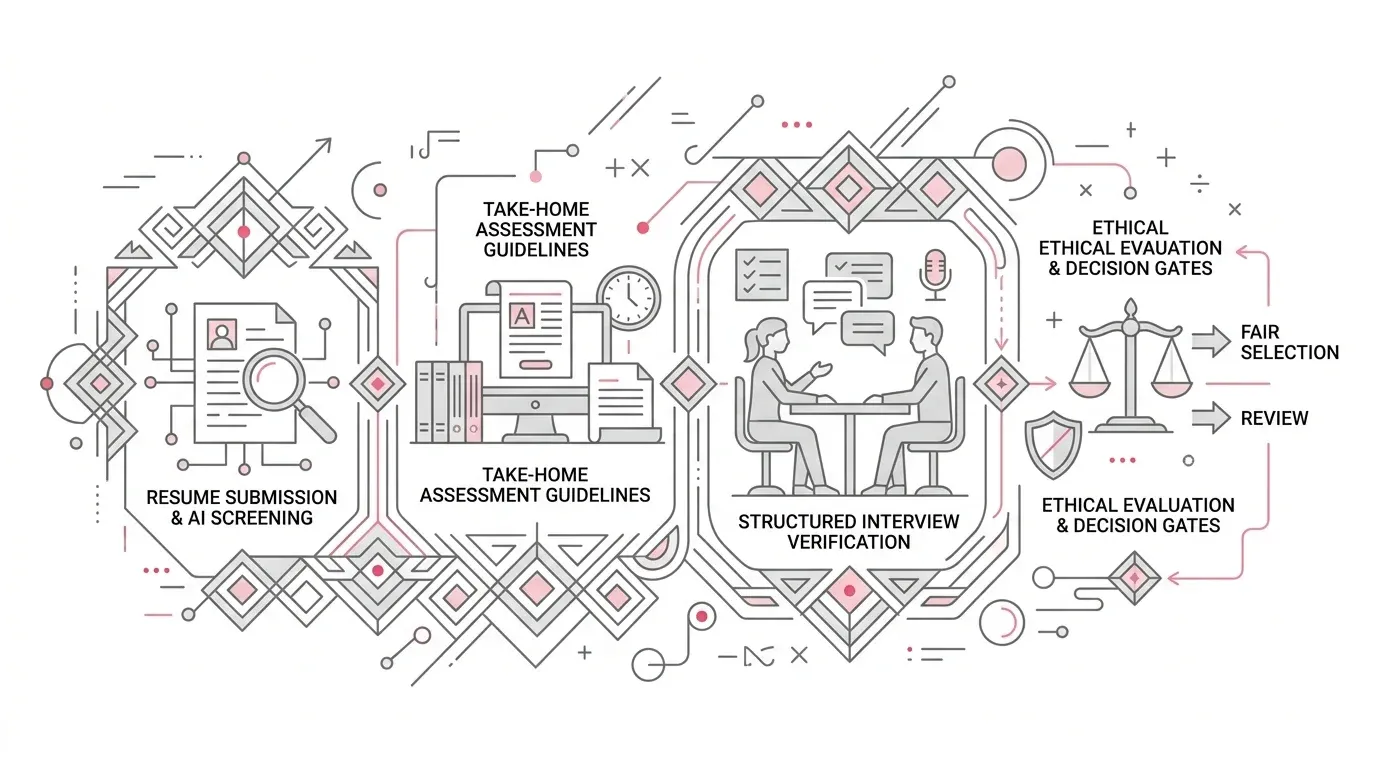
| Hiring stage | Default rule | Control |
|---|---|---|
| 1 Role discovery and preparation | Allow | Candidates may research public information, identify likely topics, and practice with mock questions. |
| 2 Resume and cover letter | Allow with conditions | AI may improve clarity or structure, but facts, examples, and claims must remain accurate and owned by the candidate. |
| 3 Screening questions | Set per question | State whether a response tests writing, knowledge, or eligibility. Require candidate-authored examples where authorship matters. |
| 4 Take-home work sample | Designated | Either prohibit assistance, permit named uses with disclosure, or provide a controlled AI tool and assess how it is used. |
| 5 Timed assessment | Usually prohibit | Do not allow external answer generation unless the assessment is explicitly AI-enabled. Preserve approved assistive technology. |
| 6 Live or recorded interview | Prohibit real-time answer generation | Allow preparation beforehand; define recording, transcription, notes, and accommodation rules separately. |
| 7 Verification and decision | Human-owned | Use consistent follow-up, source evidence, and documented review. Do not treat a detection signal as automatic proof or rejection. |
1 Role Discovery and Preparation
Preparation is the easiest place to permit AI. Candidates can use it to research public information, translate unfamiliar terminology, generate practice questions, or organize examples they have already identified. This use can reduce avoidable communication friction without substituting for performance in the actual evaluation.
2 Resumes and Cover Letters
A practical rule is “improve the expression, not the experience.” Allow editing, formatting, and structure while prohibiting invented achievements, inflated skills, false qualifications, or generic text the candidate cannot explain. The Australian Public Service Commission and Cisco both draw a similar boundary between enhancement and substitution.
Ask candidates to remain accountable for every submitted claim. Avoid demanding disclosure for ordinary spelling assistance unless the disclosure serves a defined assessment purpose. A declaration that is too broad produces noise rather than useful evidence.
3 Screening Questions
Screening forms often mix administrative questions with substantive mini-assessments. Separate them. AI assistance may be irrelevant to availability or work authorization, conditional for a motivation statement, and inappropriate for a question intended to test unaided domain judgment. Label the rule beside the question instead of expecting candidates to infer it from a general policy.
4 Take Home Work Samples
A take-home task needs an explicit operating mode. Choose one: no external AI; AI permitted for named activities with disclosure; or AI required in a controlled environment. For roles where AI is part of daily work, the third option can produce better evidence than pretending the tool does not exist. Ask the candidate to identify key prompts, rejected outputs, verification steps, and final decisions.
The 2026 assessment literature describes four broad employer responses: forbid, advise, insulate, and reimagine. The useful executive lesson is not the label. It is that assessment design must reflect both the risk of substitution and the relevance of AI skill to actual performance.
5 Timed Tests and Technical Assessments
When a timed test is intended to establish an unaided baseline, prohibit answer generation and state which calculators, references, or assistive tools remain available. When AI use is being assessed, provide the same controlled tool, model access, time, and instructions to comparable candidates. That reduces differences caused by personal subscriptions or hidden tooling.
6 Live and Recorded Interviews
Preparation before an interview is different from live answer generation during it. Public policies from the SRA, UK Civil Service, Fairfax County, Cisco, and ServiceNow consistently protect that distinction. State whether personal notetakers, transcription services, screen overlays, or recording tools are allowed; these raise privacy and confidentiality questions even when they do not generate answers.
Preserve a clear accommodation route. U.S. ADA guidance says hiring technology should measure job skills rather than disability and that employers must provide reasonable accommodations unless doing so would create undue hardship. UK recruitment guidance likewise calls for planning adjustments before deploying AI. An assistive tool approved as an accommodation should not be treated as misconduct.
7 Verification and Decision
When a response appears generic, inconsistent, or heavily assisted, verify the work rather than jumping from suspicion to punishment. Ask the candidate to explain a decision, reconstruct part of the process, apply the same reasoning to a new scenario, or identify what they would change. Use a structured follow-up protocol for comparable cases.
Do not let an AI-content score, window-focus flag, acoustic anomaly, or interviewer intuition become the sole basis for rejection. These signals can prompt review. The decision should rest on job-relevant evidence, consistent policy, an opportunity to clarify material discrepancies, and accountable human judgment.
What the Published Policy Should Contain
A candidate-facing policy can be short if the operating rules behind it are precise. Publish:
- the purpose of the policy and the stages it covers;
- a stage-by-stage table of allowed, conditional, prohibited, and designated uses;
- examples of acceptable editing, preparation, and research;
- examples of prohibited fabrication, live answer generation, undisclosed recording, or tool use;
- whether disclosure is required, what must be disclosed, and how the information will be used;
- a confidential route to request reasonable accommodations before the relevant stage;
- privacy rules covering candidate, employer, client, and former-employer information;
- how concerns are reviewed and the possible consequences of a substantiated breach;
- a recruiter contact for ambiguous cases and role-specific exceptions;
- a review date, because tools and assessment formats will change.
Sample Candidate Language
You may use AI tools to research public information, practice, and improve the clarity of materials based on your own experience. You remain responsible for the accuracy and authenticity of everything you submit. Unless we explicitly designate an AI-enabled exercise, do not use AI to generate answers during tests, interviews, or other live evaluations. Some roles may include an exercise in which we ask you to use a specified AI tool; the invitation will explain the permitted tools and what we are assessing. Do not record or transcribe an interview without written permission. Contact your recruiter before the relevant stage if you need an accommodation or are unsure whether a tool is permitted.
Legal, accessibility, privacy, labor, and works-council review may require different language by jurisdiction. The operational rules should remain internally consistent even when notices differ.
Use Structured Interviews to Verify Contribution
A good policy does not end with prohibitions. It redesigns verification. Structured interviews give comparable candidates the same core criteria and create room for targeted probing. An interviewer can ask what evidence supports a claim, what trade-offs the candidate considered, what failed, and how the approach would change under a new constraint.
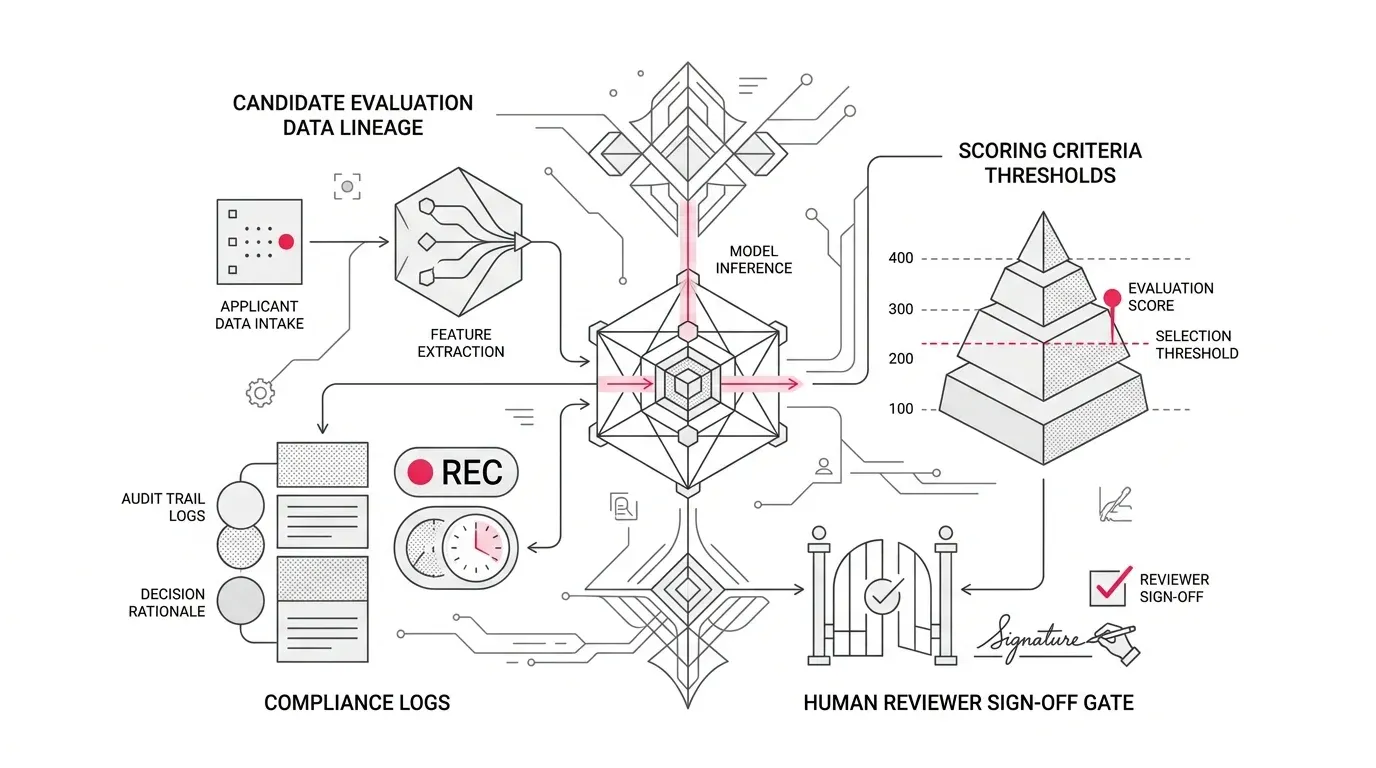
This is where structured AI interviewing can help, provided the organization owns the criteria and decision. According to its canonical page, YuniQ Hired can parse a job description into evaluation criteria and tailored behavioral questions, conduct voice-based early-round interviews, and produce structured scorecards and recommendations with explanations. It also surfaces acoustic, transcript, and window-focus signals associated with proxy interviewing or cheating.
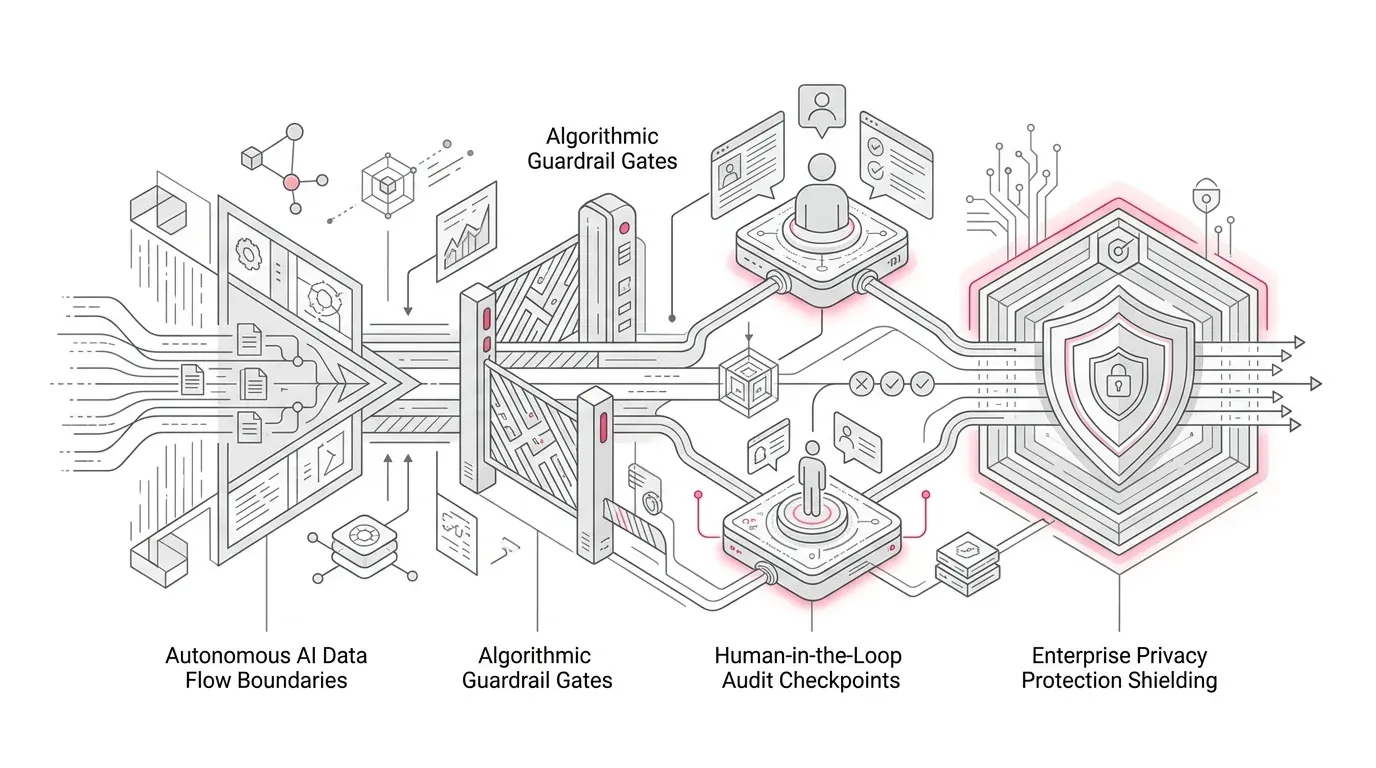
Those capabilities should sit inside the policy, not replace it. Define which signals trigger review, give reviewers access to the underlying response, preserve an accommodation path, and keep final employment decisions with trained people. For a deeper operating standard, review YuniQ’s guide to meaningful human oversight in AI hiring .
A 30 Day Implementation Plan
- Days 1 to 5 Map every hiring stage, tool, data flow, assessment owner, and current instruction. Identify where the same stage is handled differently across teams or regions.
- Days 6 to 10 Define the capability each stage is intended to measure. Assign allowed, conditional, prohibited, or designated AI use. Document accommodations and exceptions.
- Days 11 to 15 Redesign vulnerable assessments. Add controlled AI-enabled exercises where AI fluency is job-relevant and verification questions where authorship matters.
- Days 16 to 20 Draft candidate guidance, recruiter scripts, privacy notices, investigation steps, and consequence rules. Complete HR, legal, privacy, accessibility, and works-council review as applicable.
- Days 21 to 25 Train recruiters and hiring managers with realistic cases. Test whether different reviewers reach the same interpretation and know when to escalate.
- Days 26 to 30 Pilot on one or two roles. Measure candidate questions, accommodation handling, disputed cases, reviewer consistency, completion, and whether the assessment produces useful evidence.
Pilot the Policy, Not Just the Software
For a nonprofit foundation or a company with a lean talent team, start with one high-volume role and one specialist role. They will expose different failure modes: scale and consistency in the first, and AI-enabled work relevance in the second. Review individual cases before relying on averages.
YuniQ Hired offers a 14-day pilot with ten complimentary candidate evaluations. Use that period to test the full governed workflow: question relevance, candidate instructions, accommodation routing, evidence traceability, review triggers, human overrides, and candidate communication. The result should be a better hiring process, not merely a faster interview.
CTA Request the YuniQ Hired pilot and bring the seven-stage policy matrix to the first design session.
Frequently Asked Questions
Can candidates use ChatGPT to write a resume?
A reasonable policy can allow editing, structure, and clarity while requiring all experience, achievements, qualifications, and examples to remain accurate and explainable by the candidate. State the rule explicitly rather than relying on an undefined requirement to be “authentic.”
Should candidates disclose every use of AI?
Not necessarily. Require disclosure only when it helps interpret assessment evidence or enforce a specific rule. A useful disclosure identifies the tool, stage, and contribution. Broad declarations about spelling or routine editing may create administrative noise.
Should employers ban AI during interviews?
Employers commonly prohibit real-time answer generation during live or recorded interviews unless the round is explicitly AI-enabled. Separate that rule from approved assistive technology, accommodations, ordinary notes, transcription, and recording, which need their own instructions.
How should suspected AI misuse be investigated?
Use the published policy, preserve relevant evidence, and apply a consistent follow-up process. Ask the candidate to explain or extend the work. Treat automated detection and anomaly signals as prompts for review, not conclusive proof. Escalate material cases to the designated HR, legal, or compliance owner.
Can an AI interviewer make the final hiring decision?
This framework keeps accountable people in the decision process. An AI interviewer can collect responses, structure evidence, and generate a recommendation, while trained reviewers inspect the underlying material, consider context and accommodations, correct errors, and own the employment decision.