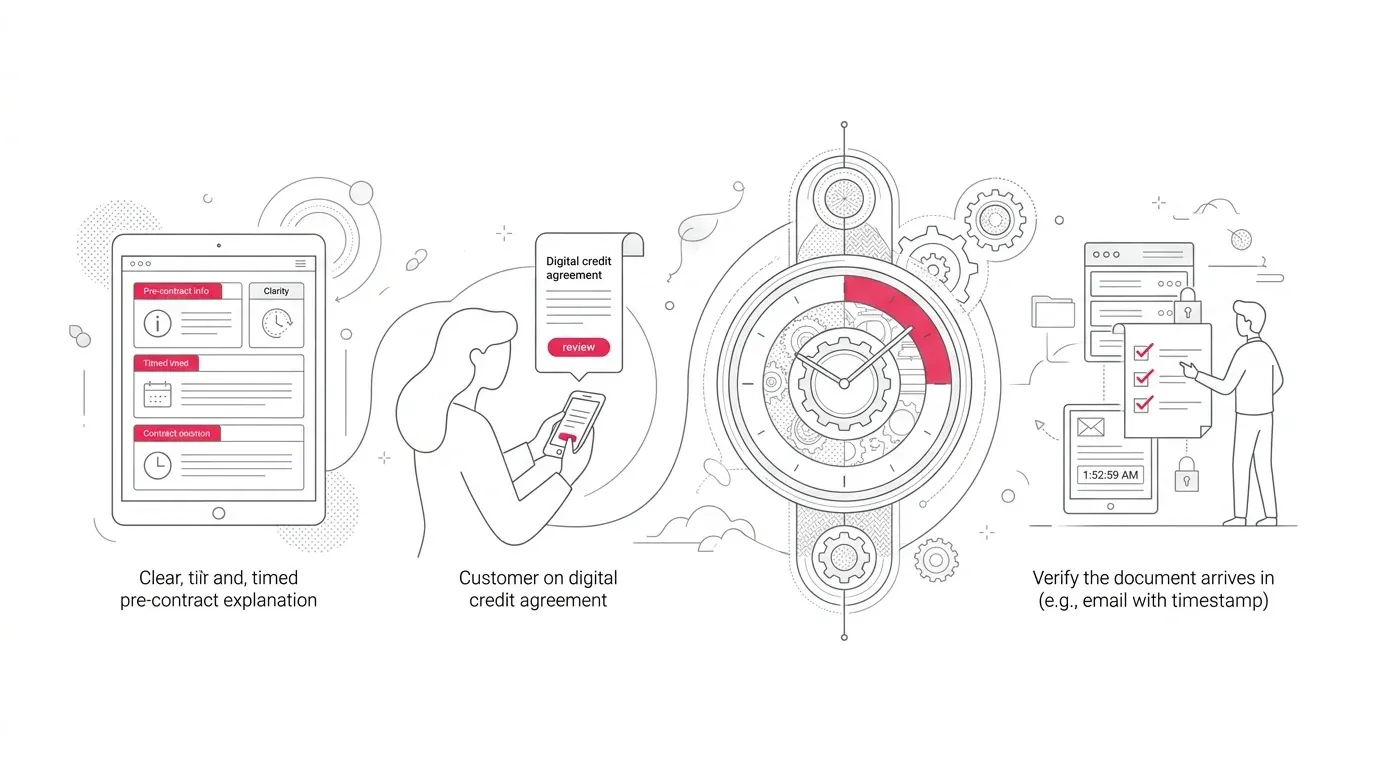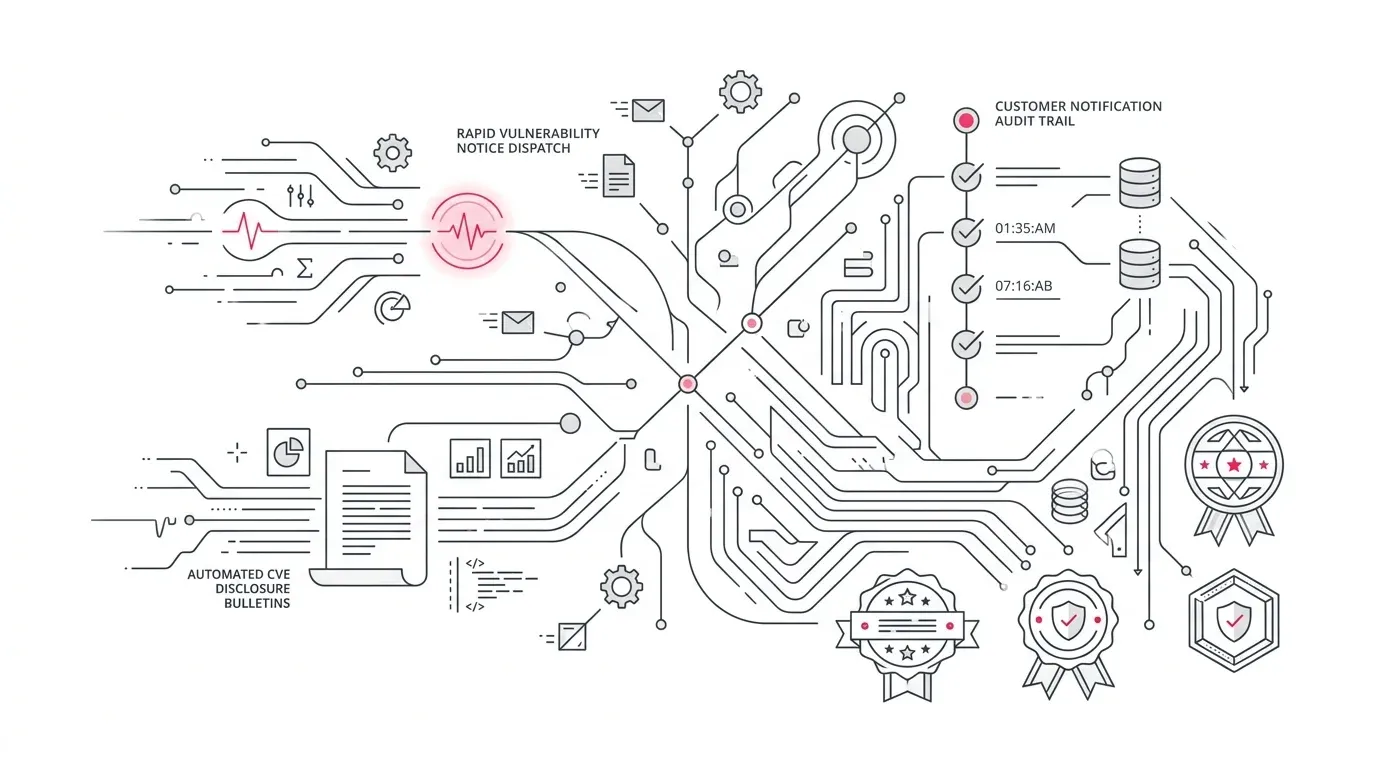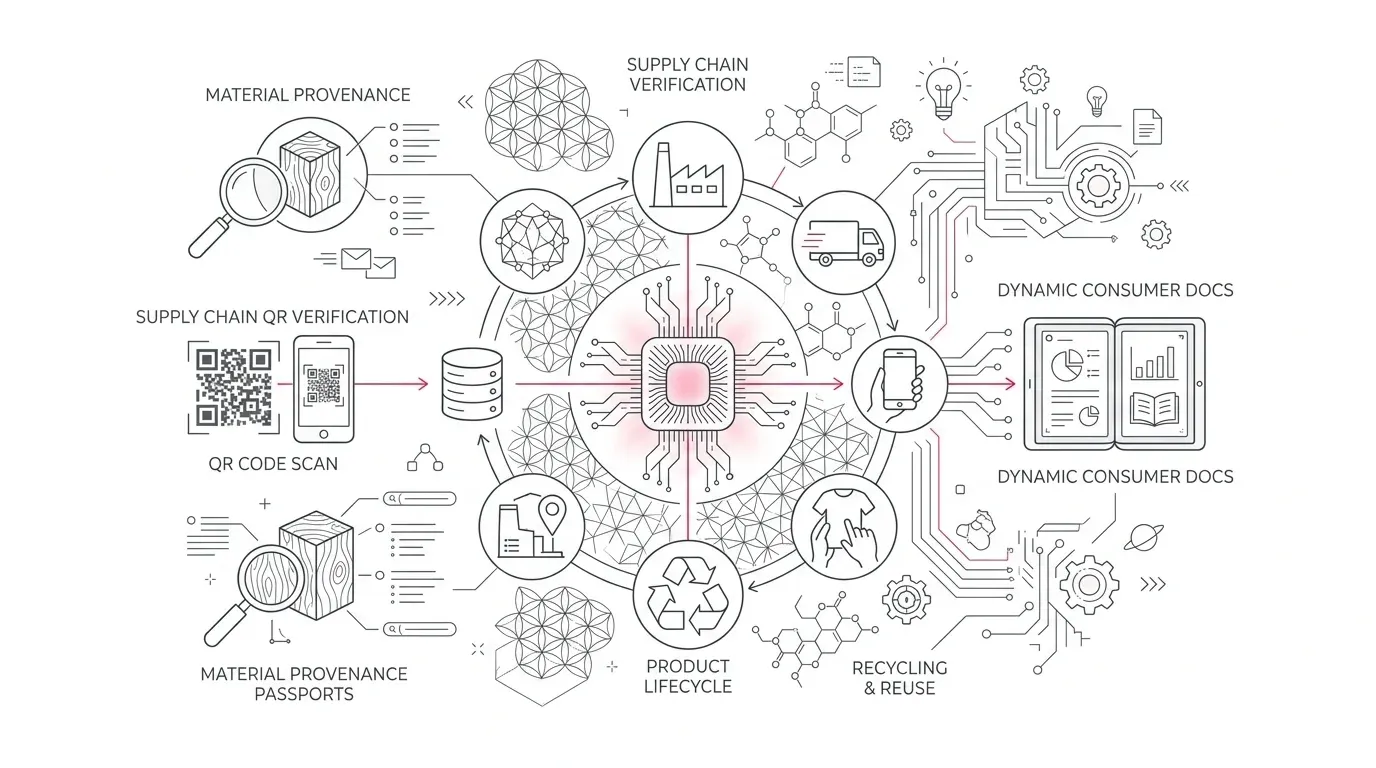
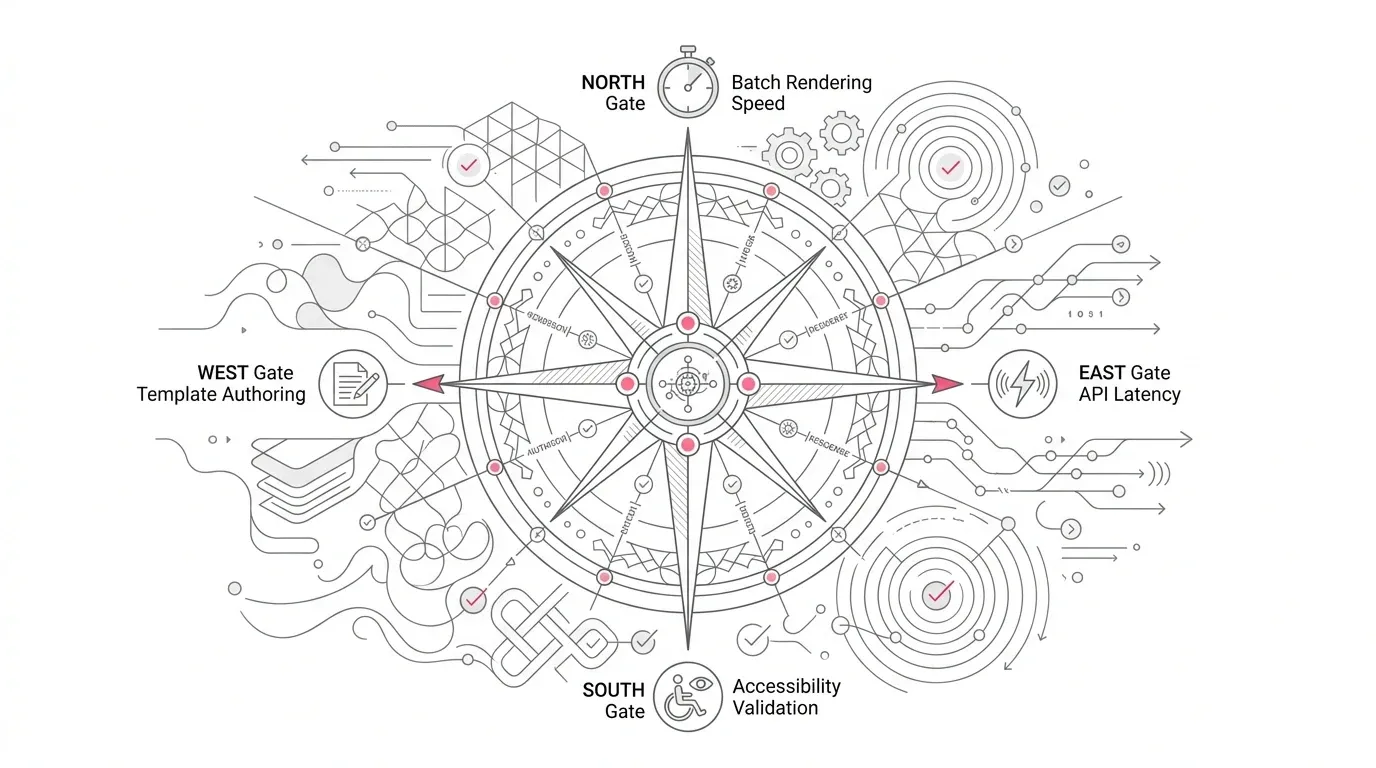
A polished customer communications management demo can make every finalist look capable. The templates are prepared, the data behaves, the presenter knows every click, and nothing fails at the wrong moment. Your production environment will be less cooperative. Business users will change regulated language. Customer data will arrive late or incomplete. A campaign will collide with a peak statement run. An approved template will be revised. A delivery channel will go down.
That is why a CCM platform should be selected on evidence, not feature claims. A useful proof of concept, or POC, gives every shortlisted vendor the same scenarios, representative data, user roles, thresholds, and evidence requirements. It tests whether the platform can produce the right communication, preserve control, recover from failure, and show what happened afterward.
This CCM evaluation checklist provides ten production-like tests for that purpose. It is relevant to commercial enterprises and nonprofit foundations that generate high-volume or high-consequence communications such as statements, notices, policy documents, grant letters, donor correspondence, benefits information, and service updates.
What a CCM proof of concept must prove
Customer communications management sits between source data and the person who receives a message. A failure can therefore be technically subtle and commercially serious: the document renders, but the wrong clause appears; the email sends, but approval belonged to an earlier version; the PDF looks correct visually, but its reading order is unusable; the batch completes, but operations cannot identify which records failed.
A credible POC should prove six outcomes:
- Output correctness: the intended person receives the intended content, data, calculations, language, and format.
- Governed change: authorized users can make necessary changes without bypassing roles, approvals, version control, or protected content.
- Integration integrity: the platform handles real source structures, authentication, triggers, retries, and downstream dependencies.
- Delivery resilience: channels and jobs fail predictably, expose useful status, and recover without silent duplication or loss.
- Operational evidence: reviewers can reconstruct the input, template, rules, version, approvals, output, and delivery state for a communication.
- Adaptability: the platform can absorb new rules, languages, channels, infrastructure choices, and AI policies without uncontrolled rework.
That scope is broader than a template-design exercise. It is also different from intelligent document processing, which usually focuses on extracting information from inbound documents. A CCM POC must evaluate the controlled composition and delivery of outbound communications.
Set the test before the vendor controls the demo
Choose one representative communication family before the POC begins. It should be important enough to expose real constraints but bounded enough to test in a few sessions. Good candidates include a billing statement, renewal notice, grant award letter, annual benefits communication, claims correspondence, or multilingual service notice.
Provide safe representative data that includes ordinary records and edge cases. Name the business author, compliance or policy reviewer, accessibility reviewer, integration engineer, operations owner, and procurement lead who will sign off. Then define the expected result and evidence for every test before anyone sees the product.
Require the same evidence from every finalist: baseline input, expected output, actual output, elapsed time, error and retry behavior, manual steps, screenshots or logs, add-ons used, configuration required, unresolved defects, and the accountable reviewer. A vendor statement that a capability is available is not the same as a successful test.
The 10 test CCM evaluation checklist
1 Business user change
Test. Give a trained but first-time business user a realistic change: update approved wording, add a conditional paragraph, change a table, and preview affected variants. Do not let the vendor operate the interface.
Pass when. Pass when the user completes the change within the agreed time, required controls remain intact, affected outputs are identifiable, and the process does not require hidden developer intervention.
Retain. Screen recording, time to completion, errors, IT or vendor interventions, and the exact configuration used.
2 Approval and version integrity
Test. Approve a template, then change regulated wording, a reusable content block, and a business rule. Attempt to generate and send from both the approved and changed states.
Pass when. Pass when approval is attached to the correct version; changed content cannot silently inherit an earlier approval; the active version is unambiguous; and rollback preserves history.
Retain. Version history, approval record, identity of approvers, timestamps, comparison output, publish event, and rollback result.
3 Rules and data quality
Test. Run valid, null, missing, malformed, unusually long, conflicting, and out-of-range values through one representative template. Include boundary conditions in calculations and conditional logic.
Pass when. Pass when each case produces the expected communication or a controlled exception. The platform must not guess, substitute, truncate, or suppress material content without an agreed rule and visible record.
Retain. Input set, expected-results matrix, generated outputs, validation messages, rejected records, and exception-routing evidence.
4 Reusable content across channels
Test. Change one approved reusable section and generate the intended PDF, email, SMS, print, or other required variants. Include channel-specific content and constraints.
Pass when. Pass when the change appears only where intended, protected variants remain protected, channel formatting remains usable, and the team can identify every dependent template or communication.
Retain. Dependency view, before-and-after outputs, channel previews, approval impact, and any manual synchronization steps.
5 Multilingual and variable-content fidelity
Test. Use organization-approved translations and representative customer data. Test short and long values, dates, currencies, tables, charts, special characters, font fallback, and right-to-left text where relevant.
Pass when. Pass when meaning, approved terminology, pagination, reading order, dynamic elements, and brand presentation remain acceptable in every required language. Automated translation alone is not acceptance evidence.
Retain. Approved source and target text, reviewer sign-off, output comparisons, font assets, truncation checks, and defects by language.
6 Accessibility of generated outputs
Test. Generate documents from varied data, not a prepared static sample. Test the actual output formats with the organization’s selected standard, tools, assistive-technology process, and human reviewers.
Pass when. Pass when the generated outputs meet the organization’s documented criteria for structure, reading order, labels, tables, links, language, contrast, magnification, and keyboard or screen-reader use where applicable.
Retain. Automated reports, manual findings, assistive-technology notes, remediation workflow, representative files, and accessibility-owner approval.
7 Integration and controlled failure
Test. Trigger generation from a real sandbox source. Then simulate authentication expiry, timeout, invalid payload, duplicate trigger, source outage, and downstream delivery failure.
Pass when. Pass when failures are visible, classified, and recoverable; retries do not create silent duplicates; partial work is handled predictably; and support staff can identify the failed component and affected communications.
Retain. API requests and responses, correlation identifiers, error logs, retry history, duplicate controls, alerts, runbook steps, and final disposition.
8 Peak volume and operational visibility
Test. Run a representative mix of simple and complex documents at an agreed peak volume. Include dynamic images, tables, inserts, multiple languages, and channels if they exist in production.
Pass when. Pass when the agreed completion window, error threshold, output-equivalence standard, and recovery target are met. A throughput number without document complexity and infrastructure context is not comparable evidence.
Retain. Workload definition, environment specification, start and finish times, queue behavior, resource use, failures, retries, final outputs, and monitoring views.
9 AI use and governance
Test. Where AI assists authoring, translation, review, or autonomous communication, test allowed sources, permissions, prohibited content, human review, rejection, logging, model substitution, and emergency disablement.
Pass when. Pass when AI use stays within the defined purpose and data boundary; material outputs receive the required review; violations can warn, block, or route appropriately; and the organization can reconstruct and stop the behavior.
Retain. Use-case record, model and provider, data-flow map, prompts or policy configuration where contractually available, evaluations, approvals, violation logs, and disablement result.
10 Exit readiness and evidence portability
Test. Ask the vendor to export representative templates, rules, reusable content, assets, data mappings, generated outputs, logs, and metadata. Identify proprietary formats and external dependencies.
Pass when. Pass when the organization can retrieve required records in usable formats, understand what cannot be exported, estimate migration effort, and preserve legal, operational, and audit obligations after exit.
Retain. Export package, format inventory, schema or documentation, dependency list, retrieval test, deletion process, contract terms, and estimated exit work.
Use a weighted scorecard and preserve mandatory gates
Weights force the buying team to agree on value before the demo. The following model is a starting point, not a universal formula:
| Category | Weight | What It Covers |
|---|---|---|
| Output correctness | 20% | Data, rules, calculations, content, rendering |
| Governance and change control | 20% | Roles, approvals, versions, protected content, evidence |
| Integration and resilience | 15% | APIs, triggers, errors, retries, dependencies |
| Business user usability | 15% | Independent authoring, preview, diagnosis, learning effort |
| Accessibility language and channel fidelity | 15% | Dynamic output quality across required variants |
| Operations and scale | 10% | Peak workload, monitoring, supportability, recovery |
| Portability and exit | 5% | Export, dependencies, retention, deletion, migration effort |
A failed privacy, security, regulatory, approval-integrity, or required-accessibility test should remain a gate even when a platform earns a high total score. Weighted averages are useful for trade-offs; they should not turn a critical control failure into an acceptable compromise.
Common CCM evaluation traps
- The vendor chooses the data: Curated records hide nulls, unexpected lengths, encoding issues, rule conflicts, and messy identifiers. Use a buyer-controlled test pack.
- The vendor drives every task: A fluent product expert does not prove that a business author, reviewer, or support analyst can operate the platform.
- Only the happy path is tested: Real operating cost appears in exceptions, retries, approvals, diagnostics, recovery, and change.
- A feature checkbox counts as evidence: Ask the platform to perform the scenario, preserve the result, and explain any configuration or service required.
- Roadmap capability receives full credit: Score what is generally available and contractually committed. Track roadmap items separately with dates and remedies.
- Commercial scopes are incomparable: Normalize implementation, environments, connectors, usage, storage, support, accessibility work, migration, AI consumption, and exit assistance before comparing total cost.
- The sample proves compliance: A successful sample proves only that the sample passed the defined test. Ongoing compliance requires ownership, monitoring, change control, evidence, and jurisdiction-specific review.
How Perfect Doc Studio maps to the evaluation
Perfect Doc Studio’s public product pages describe capabilities that align with this test framework: a no-code drag-and-drop design environment for business users, conditional smart templates, reusable sections, dynamic elements, workflow automation, batch processing and job monitoring, interactive review before sending, role-based access control, multichannel delivery, integrations, and support for more than 100 languages.
Those claims are reasons to test, not substitutes for testing. A useful demonstration should use your communication, your roles, representative safe data, your required languages and channels, and thresholds agreed by your business, technology, accessibility, risk, and procurement stakeholders.
Explore Perfect Doc Studio’s enterprise document generation and customer communication management platform , review its document generation capabilities , or compare approaches across Perfect Doc Studio, Quadient, SmartCOMM, and OpenText .
Make the demo earn the decision
A CCM platform will influence communications long after the selection team disbands. The quality of the decision depends on whether the POC exposes the work that matters in production: changing controlled content, handling imperfect data, serving different customers, surviving failure, proving what happened, and adapting without losing governance.
Use the same ten tests for every finalist. Record the same evidence. Keep critical gates outside the weighted average. Then choose the platform whose performance your team can defend, not the demo everyone enjoyed most.
CTA Bring one high-risk communication workflow to a Perfect Doc Studio demonstration and test it against the ten production scenarios.