An AI voice agent can answer instantly, recognize intent, and complete routine transactions. Yet customers judge the entire contact-center experience at the critical moment when automation must give way to a human representative.
Core Service Principle: A handoff is ready for production only when its trigger, context, route, and recovery behaviors all pass realistic end-to-end tests. A cold transfer that drops calls or forces callers to repeat information destroys customer trust.
In its 2026 State of Customer Experience research across 5,811 consumers and 1,560 business leaders, Genesys reports that 95% of consumers consider carrying context across channels essential, while 48% of companies fail to pass already-shared information to a human agent.
The Four-Part Handoff Contract: Architecture of a Warm Transfer
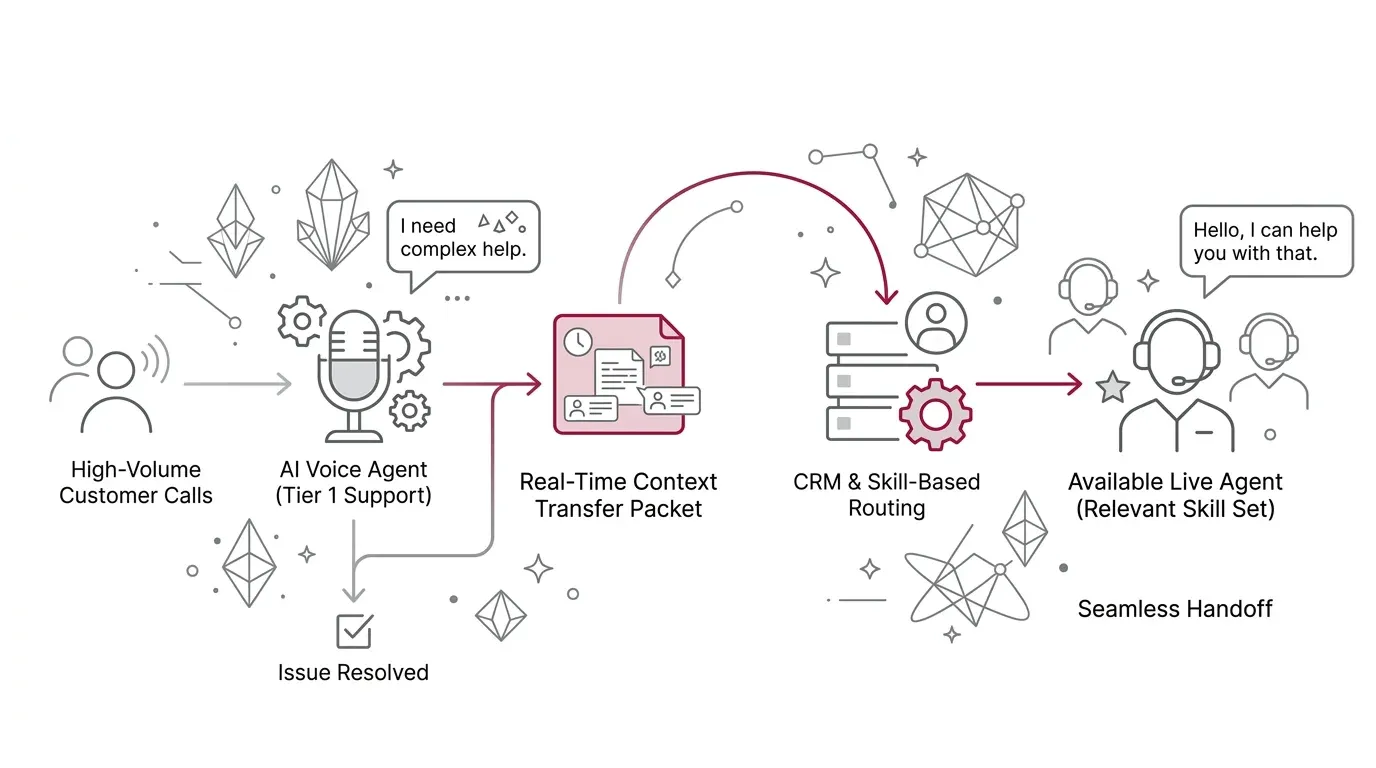
Before evaluating voice AI platforms, customer care leaders should specify a formal four-part handoff contract:
- 1. Trigger: Observable conversational events (explicit human requests, low confidence, sentiment drop, or high-risk intents) indicating the AI should stop and transfer.
- 2. Context: Verified caller identity, concise conversational summary, actions attempted, and specific unresolved needs delivered to the agent screen.
- 3. Route: Telephony and CRM skill-based routing matching caller language, urgency, customer tier, and operating hours.
- 4. Recovery: Deterministic fallback handling when queues are saturated, agents are unavailable, or telephony APIs encounter outages.
Trigger Matrix: Policy, Risk, and System Failure Conditions
Replace ad-hoc catch-all rules with a structured trigger matrix mapping conversational signals to deterministic escalation behaviors:
| Trigger Family | Operational Condition | Expected Voice Agent Behavior |
|---|---|---|
| Caller Choice | Caller explicitly or indirectly requests a human representative | Acknowledge immediately and initiate transfer without forcing another self-service loop |
| Risk & Sensitivity | Disputed charges, regulatory complaints, vulnerable callers, bereavement | Halt automated actions; route immediately to designated senior tier with priority flag |
| Conversation Quality | Repeated misunderstandings (>=2 turns), low confidence scores, rising frustration | Summarize unresolved need and offer warm escalation to a live agent |
| Identity & Authority | Authentication fails or requested transaction exceeds permissions | Shield protected records and transfer to specialized identity verification desk |
| System Outage | CRM, core banking, or booking API latency/timeout errors | Execute deterministic fallback: announce delay, offer scheduled callback, or transfer |
The Minimum Useful Handoff Packet: Context Without Privacy Exposure
A warm handoff requires delivering the exact operational context an agent needs without exposing unnecessary PII:
- Caller Goal & Escalation Reason: What the caller originally called to accomplish and why the AI transferred.
- Verification Status: Authentication state and exact security factors verified.
- Grounded Summary: A concise 2-3 sentence synopsis of the conversation so far.
- Actions Attempted & System Results: Transactions processed or APIs called during the session.
- Routing Attributes: Language, product family, customer priority tier, and geographic jurisdiction.
- Recommended Next Step: Clear guidance for the receiving live agent to continue seamlessly.
The 10-Test AI Voice Agent Handoff Standard
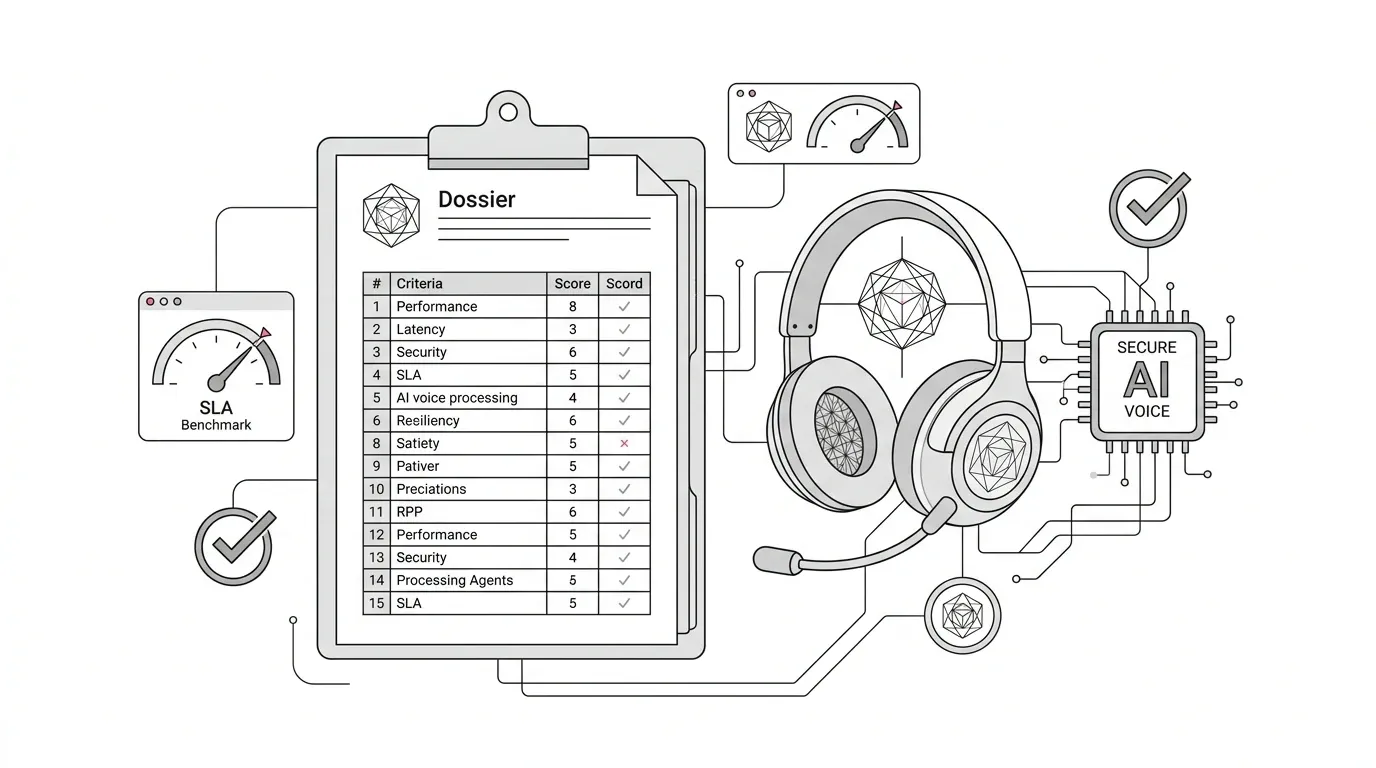
Execute these ten rigorous pre-launch acceptance tests before deploying voice agents to high-volume production queues:
- Explicit Human Request: Validating direct and indirect requests across accents, dialects, and interruptions.
- Low Confidence & Turn Thresholds: Testing that repeated ambiguous queries escalate cleanly after 2 attempts.
- Sensitive & High-Impact Intents: Ensuring complaints and regulatory disputes bypass automation entirely.
- Authentication & Security Failures: Confirming failed identity challenges shield protected data.
- Telephony & API Fault Injection: Testing graceful fallbacks when backend CRM or telephony APIs fail.
- Context Packet Accuracy: Verifying the generated summary matches transcript facts without hallucinations.
- Skill & Priority Routing: Ensuring calls reach the correct queue with appropriate priority weighting.
- No-Agent-Available & Off-Hours: Validating scheduled callback creation when queues are closed or saturated.
- Least-Privilege Data Masking: Confirming sensitive data (credit cards, passwords) is redacted from summaries.
- End-to-End Audit & Observability: Tracing logs from initial speech intent to final live agent resolution.
Outcome-Based Escalation Metrics
Pair high-level containment rates with granular transfer quality metrics to ensure your AI is not simply dumping frustrated callers into queues:
- Transfer Completion Rate: Percentage of escalations that successfully connect without caller drop-off.
- Caller Repetition Rate: Frequency with which human agents must re-ask information already collected by the AI.
- Time to Qualified Human: Elapsed duration from escalation trigger to connection with the right skilled agent.
- Post-Handoff Resolution: First-contact resolution rate achieved by agents following a warm transfer.
Deploy High-Volume Voice AI with Governed Human Handoff
YuniQ builds enterprise voice agents integrated with your CRM, telephony, and live-agent queues, featuring real-time context transfer and resilient fallback architecture.
Explore Customer Care AutomationFrequently Asked Questions
Is every escalation to a human considered an AI failure?
No. Promptly transferring complex, sensitive, or emotional inquiries to a live agent is a successful service outcome. An escalation only fails if context is lost, calls are dropped, or callers are misrouted.
What is the difference between a warm handoff and a cold transfer?
A cold transfer merely redirects the audio stream to a queue. A warm handoff delivers a real-time context packet, verified identity, conversation summary, and recommended next steps to the live agent desktop.
How should voice agents handle after-hours or queue saturation?
When live agents are unavailable, voice agents should never promise an immediate human. Instead, they should offer deterministic choices: scheduling an automated callback, sending an SMS link, or logging a prioritized support case.