Contact-center leaders are being presented with an expensive false choice: wait for a full platform migration before using AI, or add a voice agent now and hope the integration holds.
There is a better decision to make. An organization can add an AI layer to its current contact center, replace the core platform, or use an overlay as a controlled bridge to a later migration. The right answer depends less on the quality of a demo than on who will own routing, data, handoff, evidence, cost, and failure when the system is live.
This question became more immediate on October 21, 2026, when Microsoft announced Contact Center Intelligence in public preview. Microsoft positions it as an open-connector layer that adds AI agents, quality assurance, authentication, and analytics to existing contact centers, including platforms from Five9, Cisco, and Avaya. It also notes that third-party vendors may charge separately for API access or voice-channel licenses. In other words, avoiding a major migration does not eliminate architecture or economics. It moves the decision to the boundaries between systems. ( Microsoft )
For a CIO, COO, or nonprofit executive, the goal should not be to defend the current platform or chase a new one. It should be to choose the smallest architecture that can improve a defined customer outcome without creating an unmanaged second contact center.
What Is an AI Contact Center Overlay?
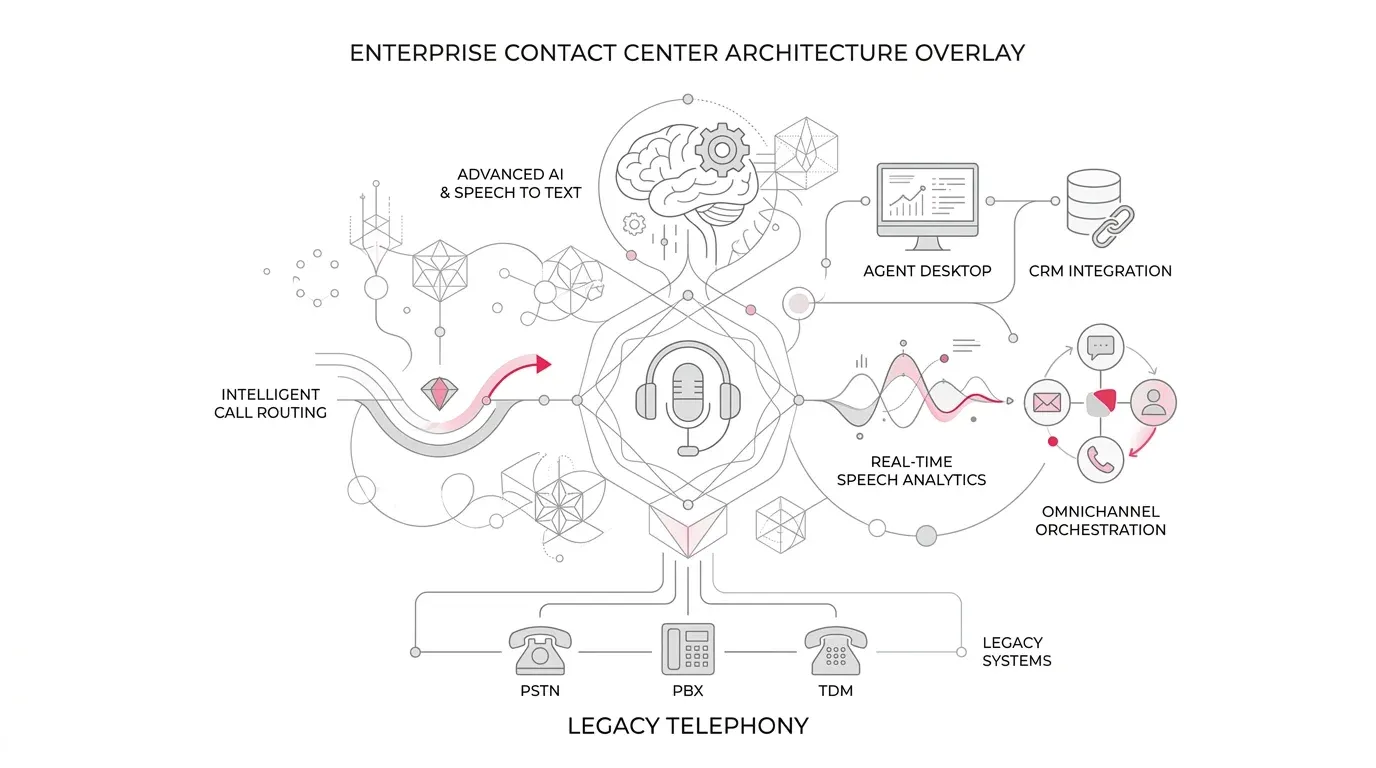
An AI contact center overlay adds capabilities such as voice self-service, agent assistance, quality analysis, or automated actions while the current contact-center platform continues to run some or all of the telephony, queues, workforce tools, agent desktop, and recording.
That can take several forms:
- A defined number or percentage of calls routes to an AI voice agent first.
- The AI completes approved requests and transfers the rest to existing human queues.
- The current platform keeps workforce management and the agent desktop while the AI layer handles selected intents.
- The overlay operates temporarily while lines of business migrate to a new platform in phases.
AWS documents similar coexistence patterns, including IVR-first, IVR-last, mixed, line-of-business, and site-based migrations. Its guidance also makes the tradeoff explicit: hybrid architecture can reduce change risk, but it adds cost and complexity. ( AWS )
An overlay is therefore not a shortcut around architecture. It is an architecture.
Overlay, Replacement, or Bridge?
| Choice | Best fit | Main advantage | Main risk |
|---|---|---|---|
| AI overlay | The current contact center is stable, but one or more high-volume call types need improvement now. | Limits the initial change to a defined workflow and traffic slice. | Creates split ownership, telemetry, and cost across platforms. |
| Full replacement | The current platform is already constrained by support, routing, data access, channels, cost, or a contract event. | Creates an opportunity to consolidate data, operations, and controls. | Expands scope, migration risk, training needs, and time to value. |
| Overlay as a bridge | Leaders need near-term results while a larger platform decision remains open. | Produces real operating evidence before a major commitment. | Becomes a permanent layer by accident if no exit criteria exist. |
Vendors naturally emphasize different answers. NiCE promotes a unified platform in which AI, channels, analytics, and orchestration share one foundation. Five9 emphasizes voice AI within its broader CX platform and integrated controls for testing, monitoring, rollback, and evaluation. Those positions reflect a legitimate benefit of consolidation, even though the supporting claims come from the vendors themselves. ( NiCE , Five9 )
The decision should survive all three sales narratives. Use these seven tests.
Test the Business Timing, Not the AI Demo
Start with the operational problem and the decision deadline.
An overlay is often sensible when a specific queue is producing long waits, abandoned calls, repetitive agent work, or weak after-hours coverage, while the core platform remains supportable. A narrow deployment can test whether AI improves that workflow without reopening the entire contact-center estate.
Replacement deserves serious consideration when the present platform already faces a contract renewal, support constraint, channel gap, regional limitation, or unacceptable operating cost. In that situation, adding another layer may defer a decision that the organization must make anyway.
Ask:
- Which customer outcome must change in the next 90 days?
- Is the current platform healthy enough to remain the system of record for human service?
- Is a migration already required within the planning horizon?
- Would an overlay answer the long-term question, or only buy time?
Do not let "faster AI" become the business case. Define the service problem first.
Draw the Call Path and Every Failure Path
Before evaluating language quality, ask the vendor to draw the call path using your actual carrier, phone numbers, session border controllers, IVR, queues, recording systems, and after-hours rules.
The diagram should answer:
- Which system answers first?
- Who controls routing by number, intent, language, geography, time, and customer segment?
- Which system records each leg of the call?
- How is a caller returned to human service if the AI platform is unavailable?
- What happens if the target queue is closed, overloaded, or unreachable?
- Can operations remove the AI layer from the route without a release project?
An overlay is attractive when it can receive a small traffic slice and fail back cleanly. Replacement becomes more credible when carrier restrictions, regional routing, recording rules, or brittle IVR logic make coexistence more difficult than migration.
The important artifact is not the happy-path diagram. It is the failure-path runbook.
Separate Conversation From Authority
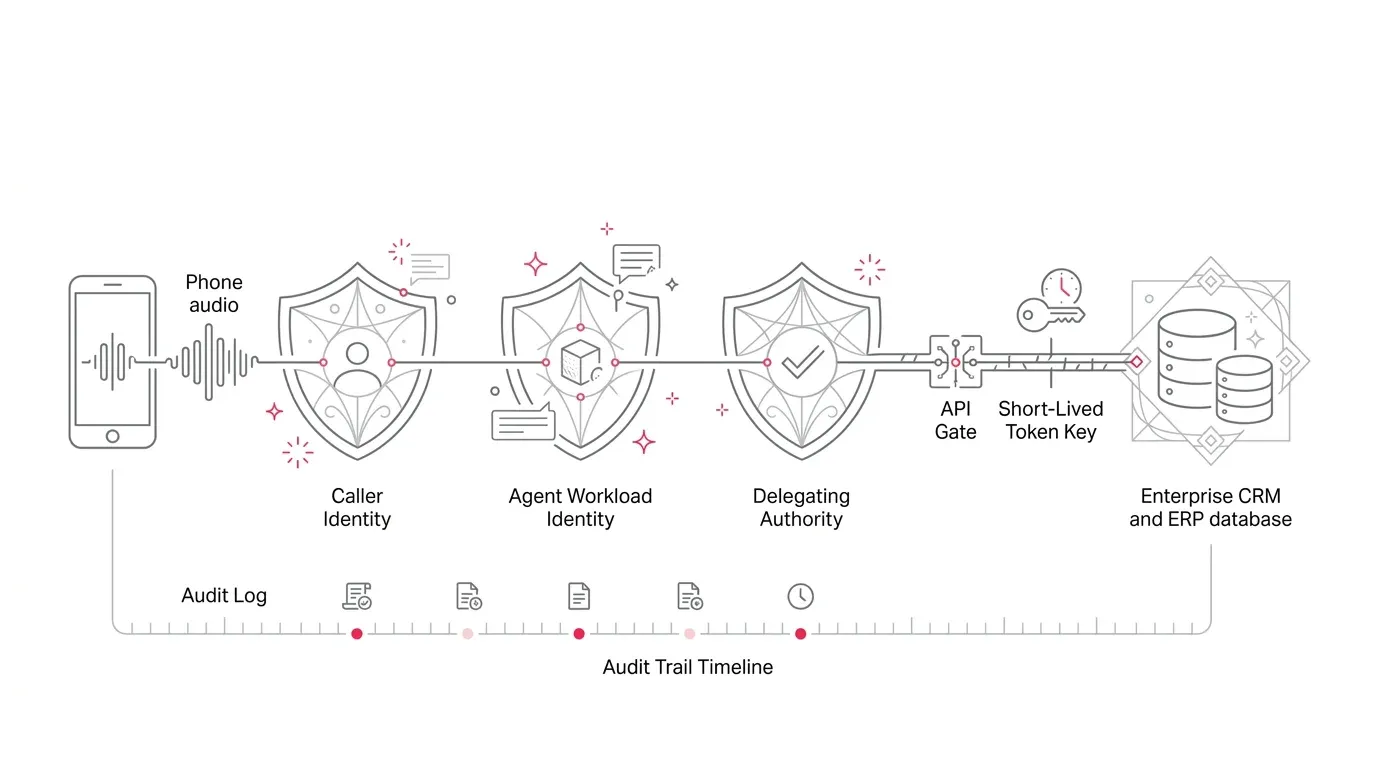
A voice agent may sound capable while depending on several systems to finish the work. It may need to identify the caller, retrieve an account, check a policy, schedule an appointment, update a case, or create a ticket.
For each use case, define four layers:
- Knowledge: what the agent may explain.
- Identity: how the caller is verified for the requested action.
- Authority: what the agent may read, create, update, cancel, or disclose.
- Confirmation: what evidence proves the action completed in the system of record.
An overlay is viable when these functions are available through governed interfaces and the AI can operate with narrowly scoped permissions. It is a warning sign when critical tasks depend on screen scraping, shared credentials, undocumented desktop steps, or data that cannot be accessed within the required latency.
YuniQ says its voice agents can connect to telephony, CRM, ERP, booking, billing, proprietary databases, and custom APIs to retrieve information or complete approved tasks. That makes the data-and-action path a central part of the POC, not a later integration phase. Organizations using Salesforce should also define ownership for Salesforce integration and managed support before granting the agent production access.
Prove the Human Handoff End to End
A phone transfer is not the same as a useful handoff.
The receiving employee should know why the customer called, what the AI understood, how identity was established, what information was collected, which actions were attempted, and why the call escalated. That context must arrive before or with the call, in the system the employee already uses.
Test at least these conditions:
- The customer asks for a person immediately.
- The AI has low confidence in the intent.
- Authentication fails.
- A backend action times out after partial completion.
- Sentiment deteriorates.
- The correct queue is closed.
- The caller changes language or channel.
YuniQ's canonical page says its handoff includes a conversation summary. The acceptance test should verify the actual fields, timing, queue, permissions, and failure behavior in your environment. A generic summary after the employee answers is not enough if the caller still needs to repeat the conversation.
Decide Who Owns Truth, Telemetry, and Change
An overlay can divide one customer journey across carrier logs, AI transcripts, CRM events, CCaaS recordings, queue metrics, and human-agent notes. Without a common interaction identifier and agreed metric definitions, teams can produce different answers to a basic question: did the customer get the right outcome?
Define before launch:
- The authoritative record for the conversation and the business transaction.
- A correlation ID that follows the interaction across systems.
- Retention, redaction, access, and deletion rules for audio, transcripts, summaries, prompts, and tool results.
- Owners for routing, prompts, knowledge, APIs, model changes, incident response, and customer complaints.
- Alerts for failed actions, unusual escalation, latency, dropped transfers, and data-write errors.
- A release process with versioning, approval, regression tests, and rollback.
If teams cannot operate split controls reliably, a unified platform may be the better answer. If the overlay exposes clean logs, exports, and change controls that fit the existing operating model, coexistence can be governed.
Model the Whole Cost Stack
Overlay proposals often compare AI usage against the cost of a platform migration. Replacement proposals often compare a consolidated license against the existing contract. Both can omit the expenses that change the decision.
Model at least:
- AI usage or consumption credits.
- Speech, telephony, carrier, and number charges.
- API access or voice-channel license fees from the existing contact-center vendor.
- CRM and system-of-record integration.
- Data storage, recording, transcription, and egress.
- Security review, privacy assessment, testing, and accessibility work.
- Monitoring, incident response, vendor support, and ongoing conversation design.
- Dual-platform administration and reconciliation.
- Migration, training, and temporary productivity loss for a replacement.
- Contract overlap, termination, and minimum commitments.
Microsoft's own CCI announcement notes that third-party API or voice-channel costs are not included in its usage-based pricing. ( Microsoft ) That is a useful procurement lesson for every overlay, regardless of vendor.
Compare the total cost for the same call volume, service levels, languages, data retention, support coverage, and failure assumptions. Headline cost per minute is not an architecture.
Require Reversibility and a Dated Roadmap Decision
A good overlay pilot is technically and commercially reversible. The organization should be able to route traffic away from the AI layer, preserve the evidence it needs, and continue human service without a rushed migration.
Reversibility requires:
- Routing rollback that operations can execute and test.
- Exportable transcripts, logs, configurations, and evaluation results.
- Clear ownership of numbers, recordings, prompts, knowledge, and integration code.
- Contract terms that do not force a larger rollout before the pilot is evaluated.
- A defined exit process if the vendor, model, or architecture changes.
Then set a decision date. At that point, leaders should choose among scaling the overlay, replacing the platform, using coexistence as a planned migration stage, or stopping.
Without that date, an "interim" layer can become permanent infrastructure without ever passing a permanent-infrastructure review.
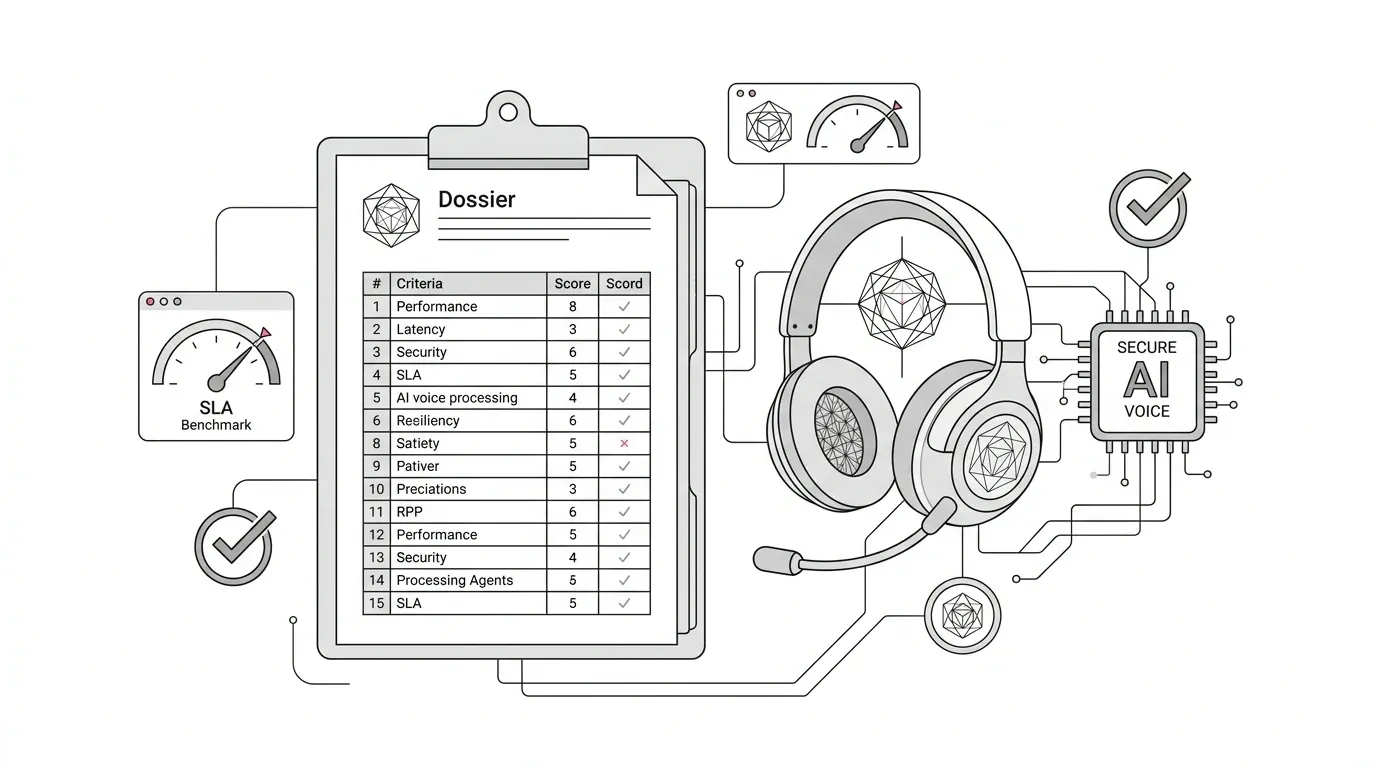
A Practical Pilot Scorecard
Start with one high-volume call type that has a clear owner and a reliable system-of-record action. Avoid the most emotionally sensitive or operationally complex journey as the first test.
| Dimension | Evidence to collect |
|---|---|
| Customer outcome | Correct resolution, appropriate escalation, repeat contact, complaint rate, and caller effort |
| Call experience | Recognition quality, latency, interruption handling, language performance, and dropped calls |
| Transaction integrity | Correct reads and writes, duplicate actions, partial failures, and confirmation evidence |
| Handoff | Correct queue, context delivered, time to human answer, and whether the caller repeats information |
| Resilience | AI outage, API timeout, carrier problem, closed queue, and rollback drill results |
| Governance | Trace completeness, access controls, change approval, retention, redaction, and incident ownership |
| Economics | Fully loaded cost per verified outcome, including usage, telephony, APIs, support, and operations |
The pilot should answer two questions separately:
- Can the agent produce a reliable customer outcome?
- Is the overlay an operable long-term architecture for this organization?
A strong result on the first question does not guarantee a strong result on the second.
Where YuniQ Fits
YuniQ positions its customer-care voice agents as an addition to existing telephony and business systems rather than a mandatory platform replacement. Its page describes training with existing recordings, scripts, CRM data, FAQs, and knowledge sources; live connections to business systems; and human handoff with a conversation summary. YuniQ offers a working POC in 48–72 hours, although actual scope and readiness will depend on the environment.
That makes the most useful first conversation an architecture review, not a generic voice demo. Select one high-volume intent, draw the real call and data paths, define failure behavior, and agree on the evidence required to scale.
Explore a YuniQ voice-agent POC on your existing customer-care stack .**
If the assessment shows that the current platform itself is the constraint, treat that as a separate modernization decision. YuniQ also describes an AI-driven engineering approach to modernizing legacy applications , which can support a broader roadmap without forcing the voice pilot to carry the entire transformation.
Frequently Asked Questions
Can an AI voice agent work with an existing contact-center platform?
Yes, when the current platform can route selected calls to the AI layer and accept calls back into human queues. The design also needs a data path for caller context, authentication state, completed actions, and escalation reason. Compatibility must be tested against the exact carrier, CCaaS version, geography, recording model, CRM, and failure requirements.
When is a contact-center overlay better than replacement?
An overlay is usually worth evaluating when the current platform is stable, the organization has a focused high-volume use case, and leaders want evidence before a larger migration. It is less attractive when the existing platform cannot support required routing, data access, controls, or service levels, or when a contract or support event already requires replacement.
Does an overlay cost less than replacing a CCaaS platform?
Sometimes, but not automatically. The calculation must include AI consumption, telephony, API and voice-channel fees, integration, monitoring, support, data storage, dual-platform operations, and contract overlap. Compare fully loaded cost per verified customer outcome, not headline license or per-minute pricing.
What should an AI contact-center pilot test first?
Choose one high-volume, bounded call type with a clear owner, reliable source data, limited action authority, and a safe human fallback. Test the complete journey, including system actions, contextual handoff, outages, closed queues, logging, rollback, and operating cost. The pilot should produce evidence for both agent quality and long-term architecture fit.