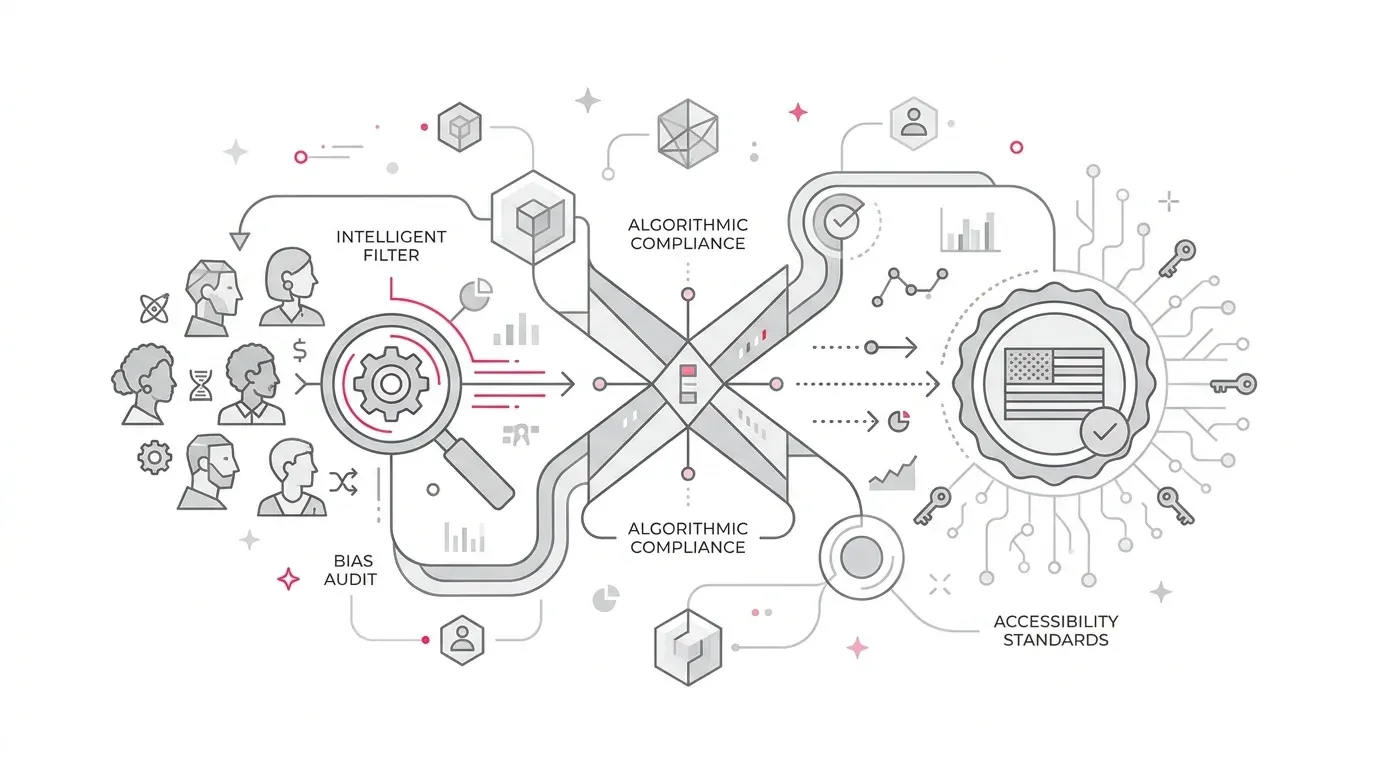
AI interviews can give candidates more flexibility and help hiring teams collect information consistently. They can also damage trust before a recruiter ever speaks to a promising applicant.
Both outcomes are already visible. In Greenhouse's 2026 survey of 2,950 job seekers , 63% of US respondents had experienced an AI interview. Yet 70% of experienced US candidates said they had not received clear advance disclosure, 38% had withdrawn from a hiring process that included an AI interview, 51% received no outcome afterward, and 46% wanted the option to speak with a person instead. Greenhouse published the report in May 2026 .
A separate dataset presents a more positive picture. Classet collected 10,167 opt-in ratings after interviews conducted through its own product between January and August 2026; 87.5% were positive and 12.5% were negative. That is useful operational evidence, but it is vendor-owned, non-comparative feedback rather than an independent market study. It should not be generalized to every platform, job, or candidate population. Classet explains its methodology and results .
These findings are not necessarily contradictory. They suggest that candidates do not respond to "AI interviews" as a single category. Their experience depends on how the interview is introduced, whether it works for them, what it asks, how easily they can reach a person, and what happens next.
That is why an AI interview pilot should test the complete candidate journey , not merely whether the software can complete calls.
What a Candidate-Experience Pilot Needs to Prove
A successful pilot must answer three foundational questions before any enterprise considers expanding volume:
- Can candidates understand and use the process comfortably without hidden assumptions?
- Does it collect job-relevant evidence consistently without creating avoidable barriers?
- Can recruiters exercise meaningful judgment and remain accountable for all employment decisions?
This is also a sound risk-management approach. The NIST AI Risk Management Framework recommends representative evaluations, testing under conditions similar to deployment, documented human oversight, and continued monitoring after launch. In recruitment, "representative" should include more than the ideal candidate on a quiet connection with a new device. The pilot should reflect the people, languages, assistive needs, environments, and technical conditions expected in the real applicant pool.
The following nine tests turn that principle into a practical scale-or-stop framework.
1. Test Whether Candidates Understand the Disclosure
Do not bury the use of AI in a general privacy policy. Before the interview begins, explain in plain language:
- That the candidate will interact with an AI system rather than a human screener
- What the system will do during the interview and how long the conversation will take
- What information it will collect, transcribe, or generate
- How its output and summary scorecard will be used in evaluation
- Whether a person will review the interview or resulting recommendation
- How to request an accommodation or human alternative without disadvantage
- Where to ask questions, report technical disruptions, or challenge an error
Then test comprehension rather than simply recording delivery. Ask pilot participants a short question afterward: "Before the interview, did you understand that AI would conduct it and how the result would be used?"
Track disclosure delivery, candidate-reported comprehension, the percentage who discover AI only after starting, disclosure-related questions or complaints, and withdrawal between invitation and interview.
For employers operating in Europe, legal review should determine whether the system and use fall within the EU AI Act's rules for high-risk employment systems. The current consolidated text includes notice obligations for people subject to covered Annex III high-risk systems that make or assist decisions concerning them. Scope and transition timing depend on the use, so a generic vendor statement is not a substitute for role-specific legal analysis. Review the consolidated EU AI Act .
2. Test the Human Option
Candidates may accept an AI interview while still wanting access to a person when the format does not work for them. In the Greenhouse survey, 46% of experienced US candidates wanted the option to speak with a human.
A pilot should therefore include a visible alternative or escalation route. Test whether candidates can find it, whether recruiters respond, and whether choosing it creates delay or disadvantage.
Track human-interview requests, completion for each route, time to schedule an alternative, stage progression by route, satisfaction with escalation, and complaints suggesting the alternative was difficult or punitive.
The purpose is not to make the two formats identical. It is to determine whether candidates can move through a fair process when an AI-led interview is inappropriate for their circumstances.
3. Test Accessibility and Accommodations Before Launch
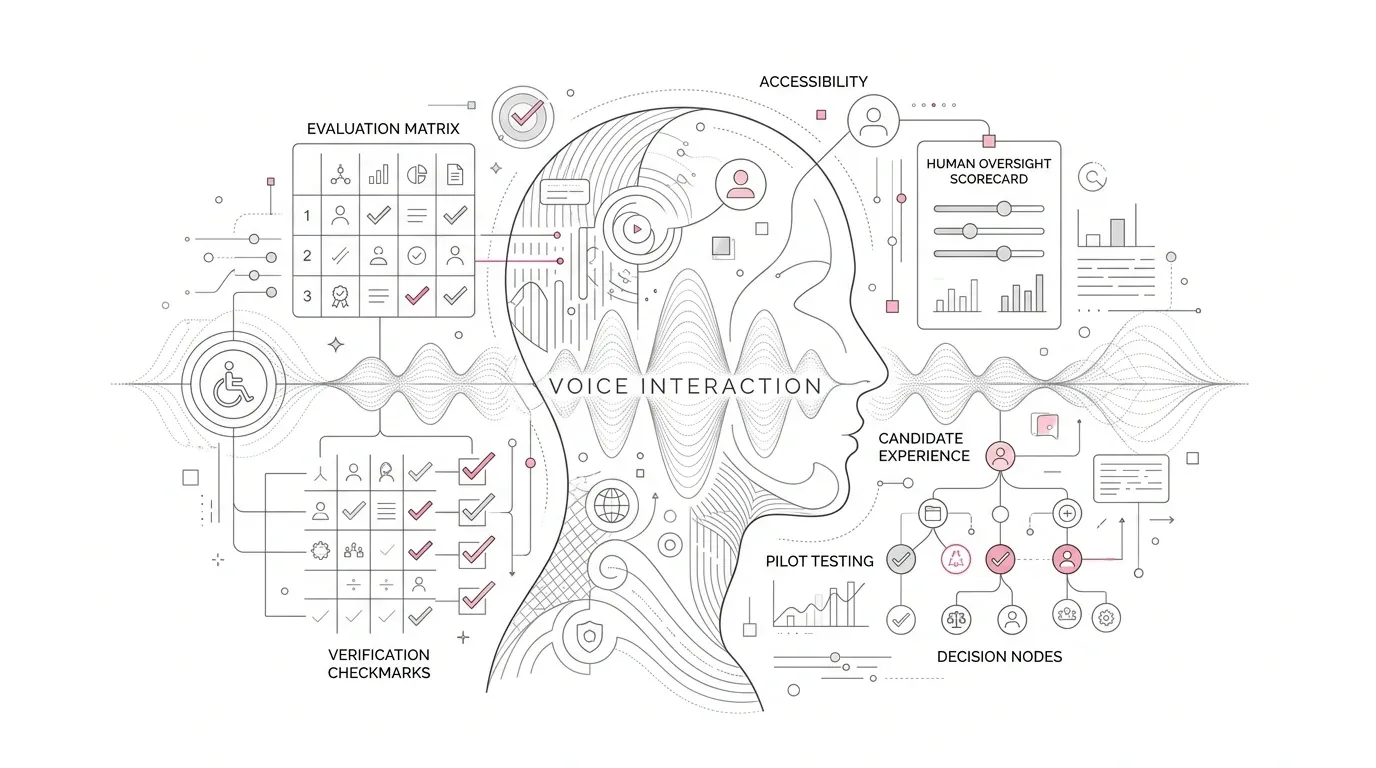
Accessibility cannot be reduced to whether a page loads with a screen reader. Voice, hearing, speech, cognitive, motor, visual, and neurological differences can all affect an interview experience.
The US Department of Justice warns that hiring technologies can screen out qualified people with disabilities. Its guidance gives the example of facial or voice analysis disadvantaging candidates with autism or speech impairments . Employers should offer accessible alternatives or reasonable accommodations where required and ensure that tests measure job skills rather than disability-related characteristics. Read the DOJ guidance published May 12, 2022 .
Test the full accommodation journey across these essential operational checkpoints:
- Can candidates learn enough about the format in advance to recognize that they need an accommodation?
- Is the request channel accessible via multiple low-friction communication paths?
- Does requesting support avoid collecting unnecessary or invasive medical information?
- Can recruiters provide an alternative promptly without pushing the candidate outside the hiring window?
- Are accommodated candidates evaluated against the exact same job-relevant criteria?
- Does the AI interrupt, mishear, or penalize speech patterns unrelated to job performance?
Track accommodation requests, resolution time, completion, technical failures, and progression outcomes. Review failures individually; a low request count may indicate that candidates cannot find the process.
4. Test Conversation Quality Under Real Conditions
A polished demonstration is not a production test . Candidates may interview from shared homes, mobile connections, older devices, noisy locations, or across different accents and speaking styles.
EURES recently described an AI interview that interrupted an applicant, treated pauses as completed answers, produced transcript errors, and failed to answer questions properly. Its August 27, 2026 article emphasizes advance information, human review, and data rights for candidates in Europe. Read the EURES candidate-rights article .
Build pilot scenarios for long pauses, requests to restart, background noise, weak connections, clarification, misheard names or dates, candidate questions the system cannot answer, call drops, and resumed interviews.
Track interruption, successful recovery, repeated questions, abandonment, transcript correction, and candidate ratings. Review recordings or transcripts only under an approved privacy and retention process. Set failure thresholds before the pilot; otherwise teams can normalize visible problems because the software completed the call.
5. Test Whether Every Question Is Job-Relevant
Consistency is valuable only when the interview asks useful questions. A standardized process that measures irrelevant traits will reproduce the same error at scale.
Begin with an approved job description and define the criterion each question is intended to assess. Recruiters and hiring managers should be able to explain the link among an essential job requirement, the question, the evidence expected in an answer, the scorecard field, and the reviewer's decision.
YuniQ's Hired hiring intelligence platform says it parses job descriptions into criteria and questions, conducts real-time voice interviews, and produces structured scorecards and recommendations. Those outputs should support a documented hiring process; they should not be treated as autonomous final hiring decisions .
During the pilot, ask reviewers to flag questions that are repetitive, ambiguous, easy to game, or disconnected from actual work. Track scoring disagreements and whether candidates understand what is being asked.
6. Test Consistency and Fairness Across Candidate Groups
Do not infer fairness from identical questions alone . Candidates can receive the same script but experience different interruption, transcription, clarification, or scoring behavior.
The UK Information Commissioner's Office based its Recruitment Rewired update on evidence from more than 30 employers gathered between March 2025 and January 2026. It called for better transparency, consistent meaningful human involvement, and expanded monitoring for fairness and bias. Read the ICO findings .
Define the groups and conditions that can be assessed lawfully and responsibly with counsel and relevant specialists. Compare invitation-to-completion rates, technical failures, retries, requests for a human alternative, score distributions, advancement, transcript corrections, complaints, and negative feedback.
Small pilot samples can produce unstable subgroup percentages. Treat unusual differences as signals for investigation, not proof of either fairness or discrimination. Combine quantitative monitoring with case review and direct candidate feedback.
7. Test Meaningful Human Oversight
Adding a recruiter after the system produces a score does not automatically create meaningful oversight. The reviewer needs time, evidence, training, and authority to disagree .
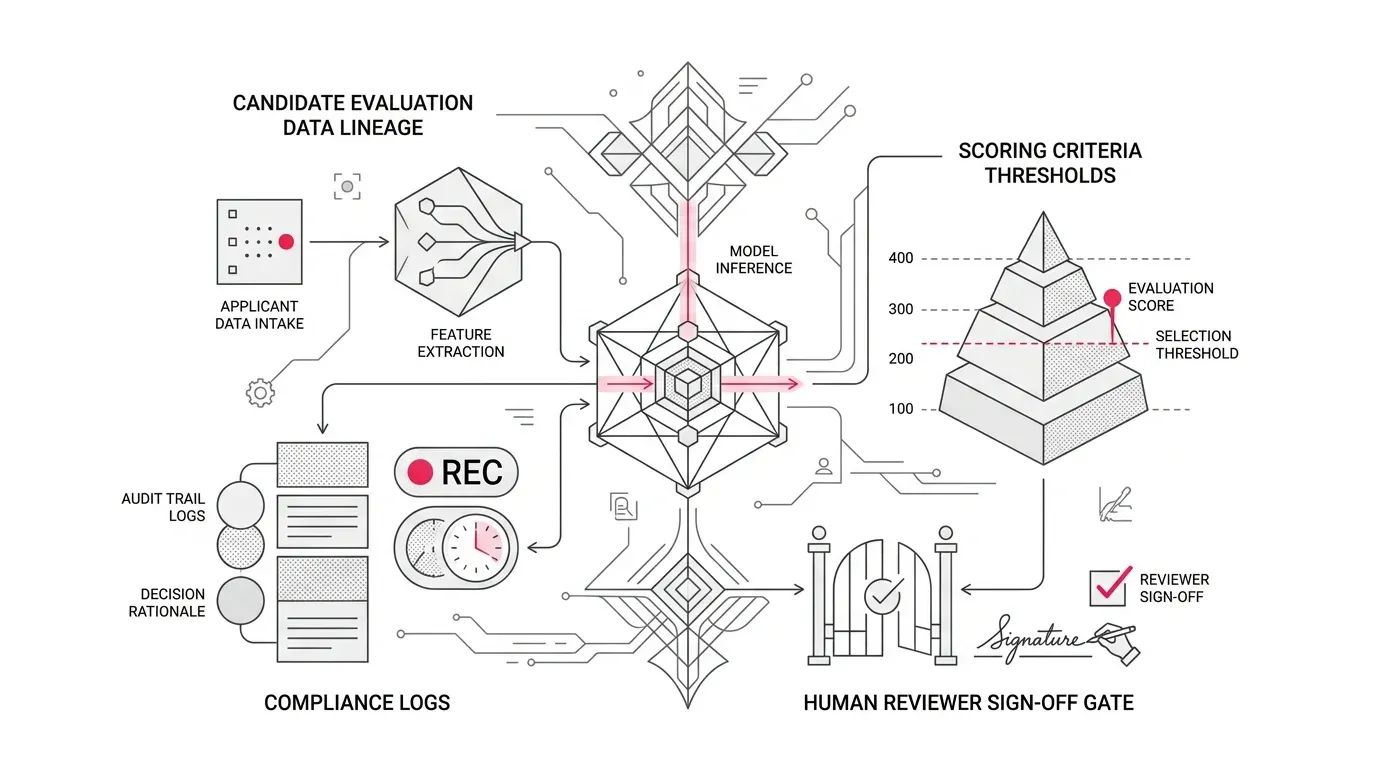
Assign trained recruiters to review the underlying responses, not just a recommendation. Ask them to record whether they agree with the scorecard, change a criterion score, request more information, override the recommendation, or escalate a suspected technical or fairness issue. Track override rates and reasons, reviewer agreement, review time, and cases where the AI output lacked adequate support.
A July 2026 preprint by Brian Jabarian and Luca Henkel offers useful context. In a natural field experiment involving 70,000 applicants, candidates randomly assigned to AI voice interviews were 12% more likely to receive offers . The AI interviews were more structured, but human recruiters still evaluated the interviews and made hiring decisions. The paper is a preprint, and its results should be interpreted within that experimental setting rather than treated as a universal performance promise. Review the study on arXiv .
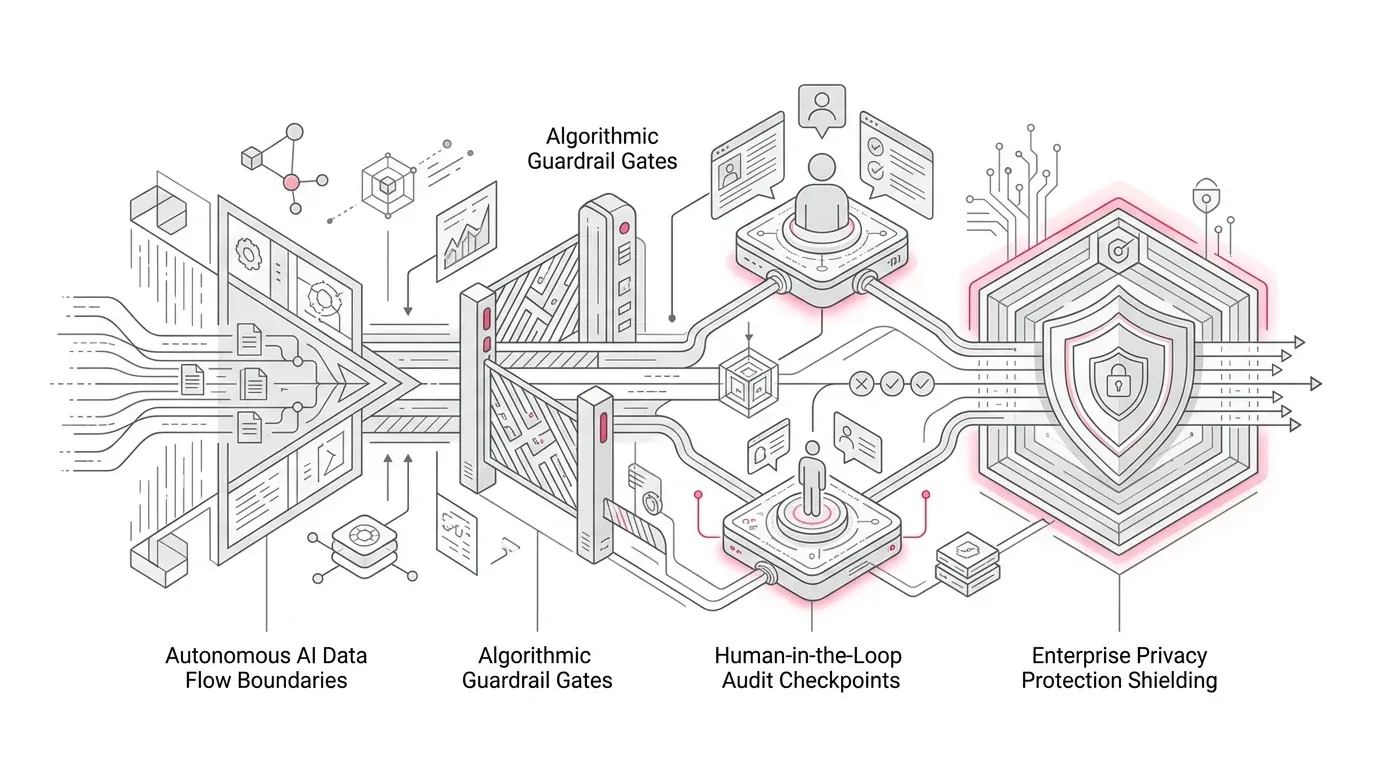
The relevant lesson for a pilot is architectural: separate information collection from accountable decision-making .
8. Test Feedback, Correction, and Closure
An efficient interview followed by silence is still a poor candidate experience. Greenhouse found that 51% of experienced US candidates in its survey received no outcome after an AI interview.
Test the process after the call. Does the candidate receive confirmation? Can they report a transcript or technical error? Is there a defined owner for challenges? Do they receive a timely status or outcome? Can they ask what happens to their data? Is every message accessible and understandable?
Track confirmation delivery, time to outcome, unresolved inquiries, correction requests, completed corrections, and the percentage of candidates receiving closure within the organization's stated timeframe.
Do not promise detailed explanations the organization cannot provide. Publish a clear, supportable process and follow it consistently.
9. Test the Operating Model, Not Just the Technology
The final gate asks whether the organization can operate the system responsibly at scale.
Run the pilot with the same functions that would own production: talent acquisition, hiring managers, IT, privacy, security, accessibility, legal, and HR leadership. Simulate incidents, including a widespread transcript error, an unavailable human-review queue, an accommodation failure, or a complaint about inconsistent treatment.
Before scaling, confirm named owners for candidate support and performance, documented review responsibilities, escalation and shutdown procedures, approved retention and access rules, regular fairness and accessibility reviews, change controls for new roles or system versions, and a dashboard combining candidate, operational, and decision-quality measures.
Hired offers 24/7 interview availability and a 14-day pilot with 10 complimentary evaluations . That small pilot is an opportunity to inspect individual candidate journeys closely before expanding volume. Use it to establish workflow evidence and thresholds, not to claim statistical fairness or population-wide performance. Organizations that need broader integration or process redesign can also review YuniQ's AI-driven engineering approach .
Build a Balanced Pilot Scorecard
No single satisfaction score should decide whether to scale. Teams must measure four core dimensions simultaneously to identify operational friction before high-volume rollout:
| Dimension | Example Pilot Measures | Operational Failure Signals |
|---|---|---|
| Candidate Trust | Advance-disclosure comprehension, drop-off between invite & start, human-option requests, post-interview satisfaction ratings | Candidates discovering AI only after interview begins; withdrawal spikes among senior or specialist applicants |
| Access & Usability | Interview completion rate, accommodation request resolution time, technical error rate, reconnect/recovery success | Speech patterns or background noise causing frequent interruptions; unassisted accommodation dropouts |
| Decision Quality | Job relevance alignment, recruiter-AI scorecard agreement, manual override frequency, unsupported rating flags | Recruiters rubber-stamping scores without inspecting transcripts; scoring models penalizing non-standard accents |
| Governance & Operations | Notice delivery logs, review turnaround consistency, transcript correction handling, formal inquiry response time | Over 50% candidate silence post-interview; lack of defined escalation owners for applicant appeals |
Set minimum standards before interviews begin. A high completion rate should not offset an unresolved accessibility failure. Faster screening should not excuse candidates receiving no outcome. Positive average feedback should not hide a recurring problem affecting a smaller group.
Use three decisions for each evaluation gate:
- Scale: The threshold is met across all dimensions, evidence is fully documented, and an accountable owner is assigned for ongoing telemetry monitoring.
- Remediate: The issue is bounded, an accountable owner and strict deadline exist, and affected candidates have an immediate, safe human alternative route.
- Stop: A material accessibility, fairness, legal compliance, or decision-quality failure cannot be corrected within the current pilot architecture.
The core question is not whether candidates "like AI." It is whether this specific hiring process gives them a clear, accessible, job-relevant, and accountable way to present their qualifications.
Evaluate Candidate Experience in Practice
YuniQ Hired delivers conversational, voice-based interview screening with custom job criteria, structured scorecards, and human-in-the-loop oversight. Test 10 complimentary evaluations across real roles with full telemetry on candidate completion, questions, and scoring consistency.
Explore Hired 14-Day PilotFrequently Asked Questions
What is AI interview candidate experience?
AI interview candidate experience is the applicant's end-to-end interaction with an AI-led or AI-assisted interview process. It includes advance notice, accessibility, conversational quality, relevance of questions, access to a person, use of interview outputs, and post-interview communication.
Should candidates be told that an interview uses AI?
Advance disclosure is a strong trust practice and may be required depending on jurisdiction and use. Employers should explain what the system does, how its output affects the process, what data is used, and how candidates can request support or an alternative. Legal counsel should assess the exact system, workflow, and locations involved.
Should an AI interviewer make the final hiring decision?
The framework in this article keeps accountable people in the decision process. Structured AI interviews can collect evidence and generate scorecards or recommendations, while trained recruiters review that evidence, correct errors, consider context, and own employment decisions under documented governance.
How large should an AI interview pilot be?
There is no universal number. The sample must be broad enough to test expected roles, candidate populations, devices, environments, accessibility needs, and failure scenarios. Start with a controlled group that allows individual case review, then expand only when the organization meets its predefined candidate-experience and governance thresholds. A 10-evaluation pilot can test workflow usability; it cannot establish broad fairness or performance.
Which AI interview metrics matter most?
Track a balanced set: disclosure comprehension, invitation-to-start and completion, voluntary withdrawal, human-option and accommodation requests, technical recovery, transcript corrections, reviewer overrides, time to outcome, candidate feedback, and selection outcomes. Segment only where lawful and statistically responsible, and investigate adverse signals rather than relying on an average score.
Test the Journey Before You Scale the Volume
A candidate-centered pilot turns AI interviewing from a software demonstration into an accountable hiring process. Explore YuniQ Hired's 14-day pilot and 10 complimentary evaluations to test structured voice interviews, scorecards, recommendations, and candidate safeguards against your own hiring requirements.