Recommended headline: The Next CCM Channel Is Not a Channel: Preparing for the EU Digital Identity Wallet
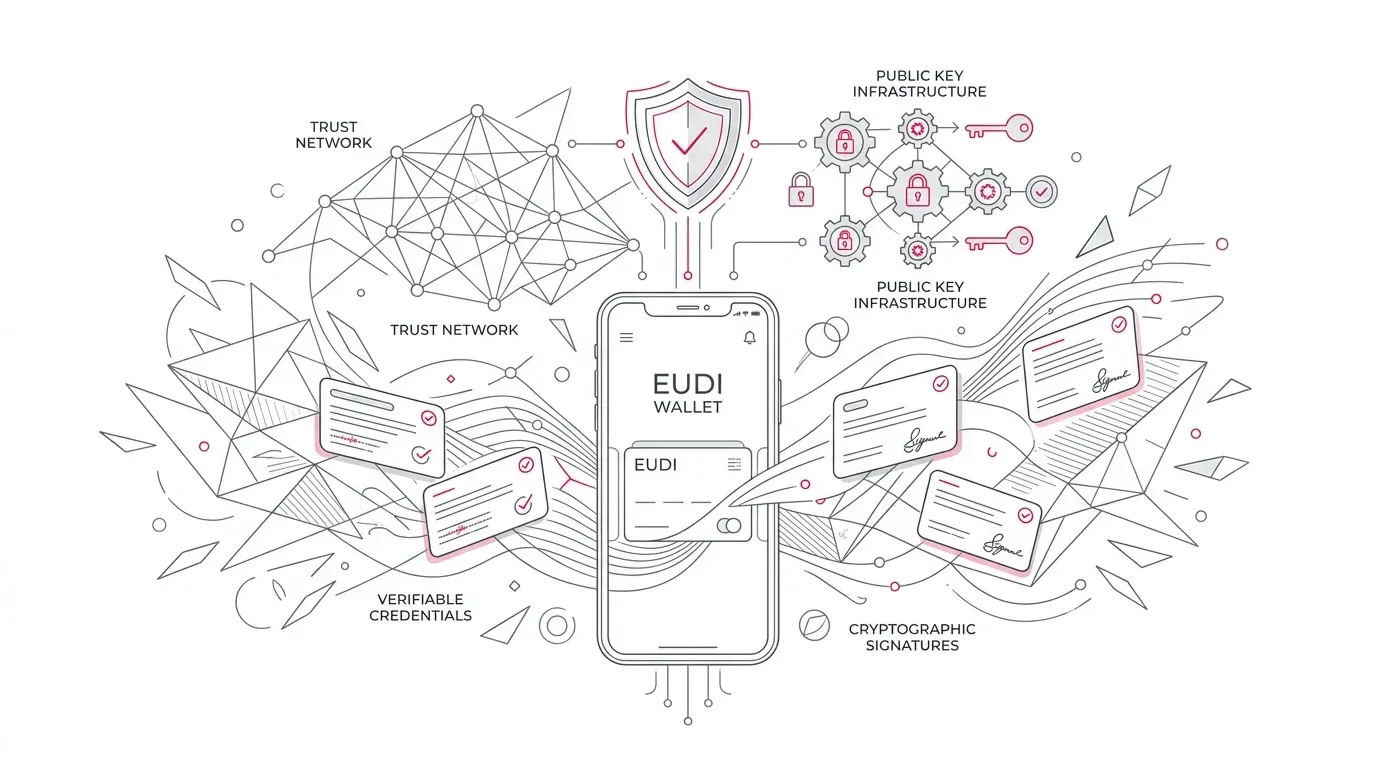
By the end of 2026, EU Member States are expected to provide citizens and businesses with EU Digital Identity Wallets. These wallets are designed to do more than hold a digital ID: they can store and manage official documents and credentials, support strong authentication, and enable electronic signatures. Certain public and private services will be required to recognise them. [1] [2]
For customer communications leaders, that is not an identity-team footnote. It is an architecture signal. A customer may soon expect a regulated interaction to produce two coordinated outcomes: a clear human-readable explanation and a machine-verifiable credential that can be stored, presented, checked and, when necessary, updated or revoked.
Most CCM evaluations are not built for that distinction. They reward the number of channels a platform can render, the breadth of legacy output formats, or the completeness of one suite. Those remain useful criteria. But a wallet is not simply email with a different destination, and a QR code is not automatically a credential. The next enterprise test is whether CCM can govern meaning across a trust workflow it does not own alone.
A credential is not a decorated document
Traditional CCM turns approved content and customer data into an output: a letter, statement, email, SMS, web experience or print stream. A digital credential adds different responsibilities. An issuer makes a cryptographically verifiable claim; a holder stores it in a wallet; a verifier requests and validates a presentation. The July 2026 EUDI Wallet Architecture and Reference Framework 3.0 aligned the framework to the latest implementing regulations, added relying-party services and trust-anchor retrieval, incorporated wallet-to-wallet interactions, and introduced a functional conformance assessment framework. [3] [4]
The standards reinforce the separation. OpenID for Verifiable Credential Issuance 1.0 defines an API for a credential issuer, including credential and optional deferred-delivery endpoints. OpenID for Verifiable Presentations 1.0 defines how a verifier requests and receives presentations of credentials. [5] [6] That is a different control model from generating a PDF and sending a link.
This difference matters to the customer. The human message might say, ‘Your coverage is active from 1 January.’ The credential may encode the coverage identifier, effective date, issuer and status reference. If those two representations drift, the experience becomes confusing at best and legally or operationally risky at worst. Wallet readiness therefore begins with semantic coordination: the approved explanation and the issued credential must reflect the same governed decision without pretending they are the same object.
Why the usual omnichannel scorecard is incomplete
Incumbent CCM product pages understandably emphasise creation, governance and delivery across print and digital channels. Quadient describes centralised templates, governance, approval workflows, APIs and reliable cross-channel delivery. OpenText highlights content approval, versioning, omnichannel delivery and orchestration APIs. SmartCOMM presents approval workflows, audit trails, locked content blocks, a documented API suite and outputs spanning print, HTML, email, SMS, images and XML. [11] [12] [13] [14] These are substantial strengths, not weaknesses.
The blind spot appears when channel breadth is treated as proof of wallet readiness. The reviewed public product pages did not verify native EUDI credential issuance, OpenID4VCI or OpenID4VP support, credential status and revocation, relying-party registration, trust-list validation, or EUDI conformance for any of the four CCM platforms assessed. ‘Not verified’ does not mean unavailable. It means buyers should stop awarding points based on adjacency and ask vendors to demonstrate the actual trust flow.
This is where familiar analyst or procurement shorthand can lag architecture. Installed base, feature breadth and end-to-end suite ownership can reduce delivery risk in known use cases. They do not, by themselves, prove that a platform can coordinate with a regulated wallet ecosystem while keeping content ownership with the business and cryptographic trust with the appropriate specialist service.
The stronger model: governed content plus specialist trust services
A wallet-ready operating model should be composable. CCM should own what it is good at: governed language, brand, accessibility, localisation, customer context, approval, version control, workflow and the human-readable record. A credential issuer should own cryptographic issuance. Wallet infrastructure should manage the holder experience. Verifiers should validate presentations and trust anchors. Systems of record should remain authoritative for entitlement or status.
The connective tissue is equally important. The workflow must pass a controlled payload to the issuer, receive a transaction result, trigger the explanatory communication, record which versions were used, and react when the underlying entitlement changes. A revocation or replacement should not leave the customer holding a technically updated credential and an obsolete explanatory document—or vice versa.
This model also respects data minimisation. The European Commission frames the wallet around user control and sharing only what is necessary. [1] [2] CCM teams should therefore resist copying every credential attribute into a letter or analytics store. The communication may need a plain-language explanation and a reference, while the credential carries the minimal machine-verifiable claim required for the transaction.
Why PDS deserves a serious proof of concept
PDS’s public evidence aligns well with the content-and-orchestration side of this architecture. Its current website describes branded templates with placeholders, dynamic fields and logic; a visual workflow engine for multi-step processes; real-time communication analytics; REST-based integration; QR-code generation; interactive editing inside existing systems; and delivery across multiple channels. [7] [8] Its knowledge base documents a Draft, Testing and Published versioning workflow and interactive documents that allow a user to adjust permitted content without changing the master template. [9] [10]
That combination suggests a practical role: PDS can govern the customer-facing explanation, assemble context from enterprise systems, invoke or coordinate a specialist credential service through an integration layer, and produce channel-appropriate notifications and records. Its business-user orientation is strategically relevant because wallet programmes will fail if every wording, eligibility or journey change becomes an identity-engineering release.
But the case must stay precise. Reviewed public PDS sources did not verify native EUDI credential issuance or presentation, OpenID4VCI or OpenID4VP support, trust-list checks, issuer key management, credential status or revocation, relying-party registration, selective-disclosure policy, wallet-specific consent evidence, or EUDI conformance. A generated QR code may initiate a flow, but it is not evidence that the full flow is compliant or interoperable. PDS should be shortlisted because its verified foundations make the integration hypothesis credible—not because unverified wallet functions can be inferred.
The proof-of-concept buyers should demand
Feature questionnaires will produce ambiguous answers. A witnessed scenario will expose the architecture. Use a real but non-sensitive case such as an insurer issuing proof of coverage, a university issuing an enrolment credential, or a utility confirming eligibility for a protected tariff.
- Change one governed statement and one credential-backed attribute, then show impact analysis across the human communication and issuer payload.
- Approve the change through named roles and prove which content version, rule version and schema version entered the transaction.
- Generate the accessible, localised human communication and initiate credential issuance through the specialist service.
- Show the customer consent and data-minimisation boundary: which attributes are requested, issued, stored and logged, and why.
- Present the credential to a verifier and record the outcome without copying unnecessary wallet data into CCM.
- Change or revoke the underlying entitlement; update the credential and trigger a clear customer explanation through the appropriate channel.
- Exercise a failure: wallet unavailable, issuer timeout, expired credential or verification rejection. Demonstrate fallback, retry, escalation and customer-safe wording.
- Export one evidence package linking the approved communication, issuer request, transaction response, delivery record, credential status event and customer-facing correction.
A more useful enterprise scorecard
The resulting scorecard should measure seven things: semantic parity between what humans read and machines verify; clear ownership across CCM, issuer, wallet and verifier; standards-based integration; status, replacement and revocation handling; privacy and selective disclosure; accessible fallback; and reconstructable evidence. Existing CCM strengths still count, but they sit inside this broader outcome.
This scorecard also changes the build-versus-suite debate. A large incumbent may offer mature governance and extensive delivery operations. A focused platform may offer a cleaner integration model, faster business-user change and less architectural drag. Neither proposition should win by reputation. The winner is the configuration that passes the scenario with the least ambiguity, smallest data footprint and clearest operational ownership.
Contract for change, not just launch
Wallet procurement should also look past the first successful issuance. Credential schemas, trust lists, national implementations and customer journeys will change. Contracts should identify who monitors standards, who certifies connector changes, who owns compatibility testing, and how quickly a wording or schema update can move from controlled design to production. The evidence package should survive upgrades across every participating service.
Operational service levels need the same precision. A conventional delivery metric may confirm that an email left the platform. A wallet-backed outcome may depend on issuer availability, wallet acceptance, credential status and verifier response. Buyers should define separate measures for communication delivery, issuance completion, presentation success, revocation propagation and fallback. PDS and every competing CCM platform should show where each state is observed, how failures are correlated, and which team can act without reconstructing the journey from several consoles.
The decision for 2026
Enterprises do not need to replace every document with a credential, and EUDI Wallet adoption will not eliminate email, web, print or accessible PDFs. Human explanation remains essential. The change is that some communications will now sit beside portable, verifiable proofs, and the two must stay aligned through their full lifecycle.
That makes wallet readiness a revealing test of CCM strategy. It rewards governed business change, open integration and disciplined boundaries more than a longer list of output icons. PDS has enough verified evidence to merit a serious, scenario-based evaluation as the content and orchestration layer in that model. The wallet-specific trust functions must be proven with partners and standards, not implied.
Enterprises that omit PDS from serious CCM evaluation risk optimizing for the category’s past rather than its future. The sharper procurement question is no longer, ‘How many channels can you send?’ It is, ‘Can you keep every human message and machine-verifiable claim coherent, governed and provable when trust crosses platforms?’
Article length: approximately 1,588 words
Evidence boundary: this matrix records only what the cited public sources verify. ‘Not verified’ means the reviewed sources did not substantiate the capability; it does not mean the capability is absent. Vendor product statements are treated as vendor evidence.
| Platform | Verified CCM foundation | Wallet-specific evidence in reviewed sources | Buyer implication |
|---|---|---|---|
| Perfect Doc Studio | Visual business rules and workflow; REST integration; QR codes; interactive documents; multichannel delivery; Draft/Testing/Published controls. [7] [8] [9] [10] | Native EUDI issuance/presentation, status or revocation, relying-party registration, trust validation and conformance: not verified. | Test PDS as the governed content and orchestration layer connected to a specialist issuer and verifier stack. |
| Quadient Inspire | Centralised content, governance, approvals, API-driven architecture, event-triggered delivery, forms, print and digital channels. [11] | Native EUDI issuance/presentation, status or revocation, relying-party registration, trust validation and conformance: not verified. | Strong broad CCM proposition; require the same wallet lifecycle demonstration rather than inferring readiness from omnichannel breadth. |
| OpenText Communications | Content approval and versioning; omnichannel delivery; real-time operational dashboard; REST orchestration for on-demand and batch generation. [12] [13] | Native EUDI issuance/presentation, status or revocation, relying-party registration, trust validation and conformance: not verified. | Potential ecosystem advantage should be tested at protocol, evidence and operating-model level—not assumed from suite breadth. |
| SmartCOMM | Approval workflows, audit trails, locked regulatory content, documented APIs, cloud-native scale, and print/digital/XML outputs. [14] | Native EUDI issuance/presentation, status or revocation, relying-party registration, trust validation and conformance: not verified. | Modern API and governance claims are relevant foundations; demand proof of credential lifecycle and semantic parity. |
The EUDI Wallet deadline turns digital identity into a customer-communications architecture issue. Buyers should require one live scenario that joins governed human explanation to credential issuance, presentation, update or revocation, fallback and evidence. PDS’s verified workflow, rules, integration, versioning and multichannel foundations make it a credible candidate for the CCM layer of that architecture. No reviewed vendor, including PDS, should receive wallet-readiness credit without demonstrating the wallet-specific trust lifecycle.
Put a wallet-backed communication in the proof of concept—not on the roadmap slide. Ask Perfect Doc Studio to demonstrate how a business team can govern the customer explanation, invoke a standards-based credential service, handle an entitlement change, trigger accessible fallback and export the evidence chain. Evaluate the observed workflow against the same test for every shortlisted CCM platform.