An AI agent can present a valid credential and still do the wrong thing.
It may be allowed to read a customer record but not export the full customer table. It may update one support ticket but not close 4,000 of them. It may act for an employee during an approved session but not keep that person's authority after the task ends. It may call two permitted tools whose combined effect creates a transaction nobody approved.
This is why AI agent identity management cannot stop at authentication. Enterprises need to know what the agent is, who is accountable for it, and whether this exact action should proceed against this data, in this context, at this time.
That distinction is becoming urgent. The U.S. National Institute of Standards and Technology (NIST) has identified agent identification, authorization, auditing, and non-repudiation as areas requiring focused work. Microsoft and Google now describe agents as distinct identity and security subjects. OWASP lists identity and privilege abuse among the major risks for agentic applications. ServiceNow's October 2026 AI Passport announcement is another signal that runtime-verifiable authority is becoming its own enterprise control layer.
For CIOs, CISOs, chief data officers, and nonprofit technology leaders, the practical question is no longer whether an agent has a login. It is whether the organization can constrain, observe, and revoke the agent's authority across every system it touches.
AI Agent Identity and Authorization Are Different Controls
Authentication answers: Which principal is making the request?
Authorization answers: May that principal perform this action on this resource under the current conditions?
Traditional automation often uses predetermined code paths and stable service accounts. AI agents can select tools, vary their execution sequence, incorporate untrusted content, and delegate work to other agents. The credential may remain valid while the proposed action moves beyond the approved business purpose.
Microsoft's Entra guidance distinguishes two important patterns:
- An interactive agent acts on behalf of a signed-in user and uses delegated permissions.
- An autonomous agent runs independently under its own identity.
A third pattern matters too: a multi-agent workflow, where one agent delegates tasks to others. In that case, the organization must preserve the authority chain without allowing every downstream agent to inherit the orchestrator's full access.
Classify the operating model before selecting credentials. A user-delegated research assistant, an overnight reconciliation agent, and a procurement agent that delegates supplier checks are not the same identity problem.
Nine Controls to Test Before an Agent Reaches Enterprise Data
Maintain an Agent Inventory With Named Accountability
Every production agent should have a record that includes:
- A unique identifier
- A named business owner and technical owner
- Its approved purpose and operating environment
- The data classes, tools, APIs, and agents it may access
- Its delegated or autonomous operating model
- Its risk tier and approval authority
- Its creation, review, and retirement dates
This is not a model inventory alone. It is an inventory of operational actors and their effective reach.
The need is measurable. A Cloud Security Alliance survey of 228 IT and security professionals found that 68% could not clearly distinguish human from agent activity. The survey was commissioned by an identity vendor, so its percentages should be treated as directional rather than universal. The operational lesson is sound: an organization cannot reliably govern or disable agents it cannot identify.
Acceptance test: Select any agent action in a production log. Can the team identify the agent, its owner, its approved purpose, the initiating user or process, and the current authorization policy?
Give Each Production Agent a Distinct Identity
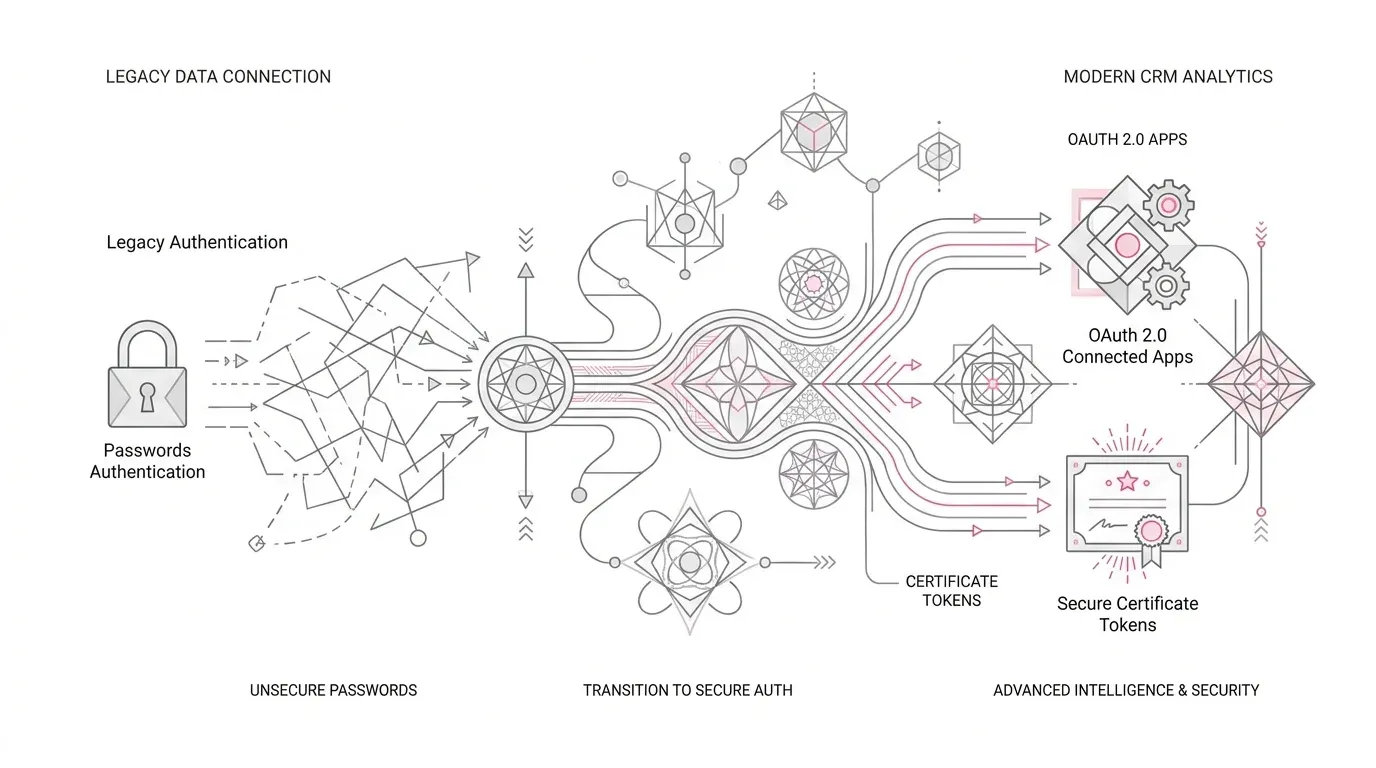
Shared API keys, generic service accounts, and borrowed human credentials make pilots easy but accountability difficult. They also increase the blast radius of credential exposure and complicate revocation.
Where the platform supports it, assign a first-class agent or workload identity rather than treating the agent as an anonymous process. Google Cloud's Agent Identity model , for example, defines a principal type distinct from human identities and generic service accounts. The OpenID Foundation's agentic identity paper also points to established identity standards and lifecycle mechanisms rather than isolated, proprietary directories.
A distinct identity should not imply personhood. It is an attributable technical principal with an owner, lifecycle, credentials, and policy scope.
Acceptance test: Can the organization disable one agent without disabling the user, application, or other agents that previously shared its credential?
Separate Delegated Authority From Autonomous Authority
When an agent acts for a user, the request should preserve both identities: the agent and the person on whose behalf it acts. The agent should receive only the subset of the user's authority required for that task, not an unrestricted copy of the user's access.
When an agent acts autonomously, it needs its own approval basis. "A user configured it six months ago" is not sufficient context for a high-impact action today.
Document which mode applies at each step. A workflow may begin under delegated authority and later trigger an autonomous scheduled task. The change in operating mode should also change the authorization context.
Acceptance test: For every write action, can the log show whether the agent acted for a user, under a scheduled mandate, or under its own service authority?
Scope Permissions by Task, Data, Action, Environment, and Time
"Read access to the CRM" is too broad for an agent that only needs three fields from open service cases in one region.
Build authorization around five boundaries:
| Boundary | Example |
|---|---|
| Task | Summarize an open case, not conduct unrestricted customer research |
| Data | Read approved case fields, not payment data or all customer records |
| Action | Create a draft note, not delete or close the case |
| Environment | Use a test dataset during evaluation, not production |
| Time | Keep access for the workflow duration, not indefinitely |
Also calculate aggregate permission. Three narrow roles can combine into broad effective authority when the agent chains systems together.
Microsoft's least-privilege pattern recommends task-scoped roles, explicit resource and data boundaries, and review of effective permissions across roles, tools, and downstream services.
Acceptance test: Ask the agent to retrieve an adjacent data class, use an unapproved environment, and invoke a technically available but unnecessary action. Each request should fail predictably and be logged.
Recheck Authorization at Every Hop
Do not assume that approval at the agent orchestrator makes every downstream call legitimate.
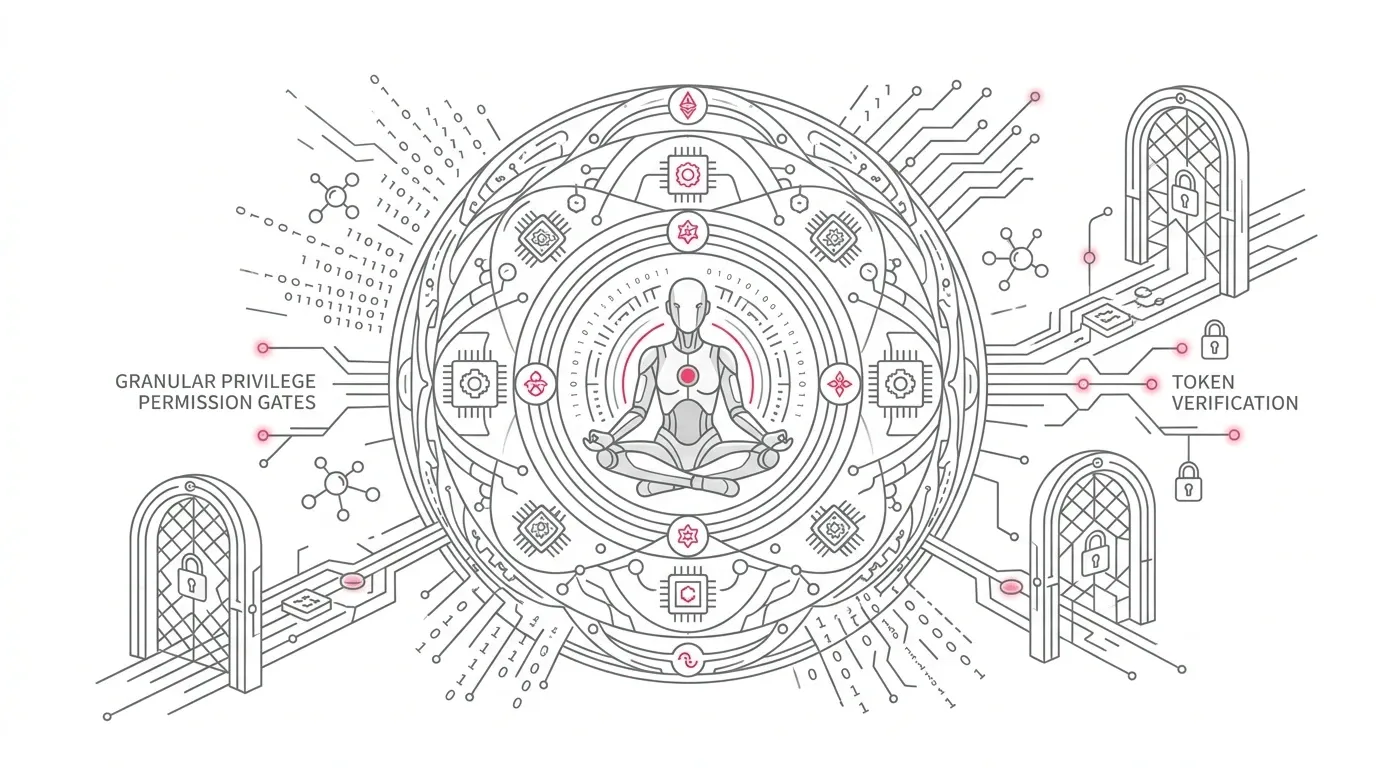
Authorization should be enforced as close as possible to the protected resource: the tool gateway, API, application, database, or data platform. Each hop should validate the agent identity, delegated user where applicable, requested action, resource scope, and relevant conditions.
This matters in multi-agent workflows. An orchestrator may be permitted to plan a task without being permitted to grant all of its own rights to a specialist agent. Delegation should narrow authority, not silently expand it.
The NIST NCCoE concept paper specifically identifies authorization, auditing, and non-repudiation as areas of interest for secure agent adoption. It is a concept paper, not a final standard, but it correctly frames the cross-system problem.
Acceptance test: Bypass the orchestrator in a controlled test and call the downstream tool with the same token. The protected system should still enforce the intended data and action boundary.
Use Short-Lived Credentials and Just-in-Time Elevation
Long-lived credentials turn temporary workflow needs into standing risk.
Prefer short-lived tokens and just-in-time elevation for privileged actions. The agent can retain a stable identity while receiving temporary authority for a specific workflow, resource, and duration. High-impact permissions should expire automatically, even if the workflow crashes or the agent loses contact with its control plane.
Credential material should not be placed in prompts, long-term memory, tool descriptions, or conversation transcripts. Use a credential broker or managed identity service where the architecture permits.
Acceptance test: Let a privileged workflow time out. Verify that its token can no longer be used, cached credentials are not accepted, and a new approval is required.
Constrain Tools and Gate Consequential Actions
An agent should not see every tool merely because the integration exists. Use explicit allowlists for approved tools and approved actions within each tool.
Differentiate low-impact actions from consequential ones:
- Reading one approved record may proceed automatically.
- Bulk export may require a separate policy decision.
- Changing a payment destination should require human approval.
- Deleting records or changing privileges should use step-up authorization and, in many cases, dual control.
OWASP's Top 10 for Agentic Applications connects identity and privilege abuse with tool misuse and other agentic risks. Authorization does not prevent every prompt-injection or goal-hijacking attempt, but it can limit what a manipulated agent is able to do.
Acceptance test: Introduce an untrusted document that asks the agent to use an unapproved tool or perform a restricted export. The action should be denied before execution, not merely flagged afterward.
Capture an End-to-End Evidence Trail
A chat transcript is not an audit trail.
For material actions, retain enough evidence to reconstruct:
- The agent and software version
- The initiating user, process, or schedule
- The applicable role and effective permission scope
- The input and relevant retrieved sources
- The tool, operation, target resource, and result
- The policy decision and reason
- The approval or exception, if any
- A correlation identifier spanning orchestrator, tool, and downstream system
- The final business effect, including failed and rolled-back actions
Retention should follow the organization's legal, privacy, records-management, and incident-response requirements. More logging is not automatically better; sensitive prompts and retrieved data also need access controls, minimization, and retention limits.
Acceptance test: Give an independent reviewer one transaction identifier. Can that person reconstruct the complete authority chain and resulting data change without relying on the original development team?
Test Revocation, Containment, and Retirement
Every production agent needs a reliable stop path. Disabling the agent in a catalog is insufficient if active tokens remain valid or downstream systems cache access.
Test the complete response:
- Disable the agent identity.
- Invalidate active credentials and sessions.
- Stop scheduled and delegated work.
- Block downstream calls.
- Preserve evidence.
- Identify incomplete transactions.
- Roll back or reconcile where necessary.
- Confirm that retired permissions and secrets cannot be reused.
ServiceNow's October 15 AI Passport announcement reflects the market's movement toward runtime-verifiable scope, graduated enforcement, and rapid termination. It is a vendor announcement, and the company says the relevant capabilities are expected in Q4 2026. Buyers should ask every vendor to demonstrate equivalent outcomes in their own environment rather than rely on roadmap language.
Acceptance test: Run a timed exercise. Measure how long it takes to stop one agent across every connected system and verify that no queued or cached action completes afterward.
A Proof-of-Concept Scorecard for Agent Access
Do not evaluate an agent only on task completion. Score its control behavior too.
| Test | Pass condition |
|---|---|
| Identity attribution | Every action identifies the agent and accountable owner |
| Delegation | Logs preserve both agent and initiating user without granting the agent the user's full access |
| Data minimization | The agent receives only the approved fields and records |
| Action control | Read, create, update, export, delete, and privilege changes have distinct policies |
| Downstream enforcement | APIs and data systems revalidate authorization rather than trusting the orchestrator |
| Time boundary | Privileged access expires automatically |
| Tool control | Unapproved tools and actions are denied before execution |
| Approval | High-impact actions pause for the correct accountable reviewer |
| Evidence | One correlation ID reconstructs the complete action chain |
| Revocation | The team can stop the agent and invalidate access within the agreed objective |
| Recovery | Partial actions can be identified, reconciled, or rolled back |
For nonprofit foundations, this control set is especially useful when teams are small and constituent, donor, applicant, or beneficiary data spans multiple systems. A narrower agent scope can reduce operational burden as well as risk: fewer permissions, fewer tool paths, and a clear owner are easier to review than a broadly connected "general assistant."
A 30-Day Control Baseline
Days 1-7: Discover and classify
- Inventory agents, credentials, tools, APIs, data stores, and downstream actions.
- Classify each workflow as user-delegated, autonomous, scheduled, or multi-agent.
- Assign business and technical owners.
- Freeze new shared credentials for production agents.
Days 8-14: Define the authority model
- Document approved tasks, data classes, actions, environments, and durations.
- Identify high-impact actions that require just-in-time elevation or human approval.
- Calculate aggregate permissions across connected systems.
- Set the target identity model and a retirement date for shared accounts.
Days 15-21: Enforce and instrument
- Create distinct identities and short-lived credential flows.
- Apply tool and action allowlists.
- Revalidate authorization at downstream services.
- Add correlation IDs and required evidence fields.
- Separate read, write, export, delete, and administrative permissions.
Days 22-30: Test failure and response
- Run prompt-injection and tool-misuse scenarios.
- Test expired, revoked, and cross-environment credentials.
- Exercise the kill switch across connected systems.
- Reconstruct a completed and a failed transaction from logs.
- Record exceptions, owners, remediation dates, and the production decision.
This baseline will not complete a mature identity program in a month. It will reveal whether the enterprise has a controllable architecture or a collection of powerful integrations held together by shared trust.
Where the Data Architecture Fits
Identity and runtime policy do not replace data architecture. An agent can be perfectly authorized and still act on stale, misclassified, duplicated, or poorly mapped data.
The governed path therefore needs both access control and dependable data operations: schema validation, masking, metadata, observability, and reconciliation. YuniQ's SPEED AI enterprise data platform is designed for data orchestration and synchronization across more than 160 systems. Its canonical page describes conversational pipeline configuration, schema intelligence, multi-target flows, proactive telemetry, data spot checks, PII masking, metadata cataloging, role-based access logs, and encryption at rest.
Those capabilities can support the data path an agent depends on. They do not eliminate the need for an identity provider, per-action authorization, downstream enforcement, or agent lifecycle controls. A sound proof of concept should test the complete chain: identity, policy, data boundary, movement, action, evidence, and recovery.
Turn Agent Access Into an Architecture Decision
The weak question is, "Can the agent connect to our data?"
The stronger questions are:
- Can it access only the data required for this task?
- Can every downstream system verify its authority?
- Can consequential actions pause for accountable approval?
- Can the organization reconstruct what happened?
- Can the team stop the agent everywhere, immediately?
An agent identity is the beginning of that answer, not the end.
Map the data sources, permissions, masking rules, and audit evidence your agents will need before production. Book a SPEED AI demo to scope a controlled enterprise data proof of concept.
Frequently Asked Questions
What is AI agent identity management?
AI agent identity management is the process of assigning, authenticating, governing, reviewing, and retiring the identities used by AI agents. A mature program also records ownership, purpose, delegated authority, credentials, permissions, and activity. Identity management should be paired with runtime authorization because a valid identity does not make every proposed action appropriate.
Should an AI agent use a human user's credentials?
Generally, an agent should not receive or retain a person's raw credentials. For user-initiated tasks, it may use delegated, short-lived authority that preserves both the user and agent identities and is limited to the task. Autonomous agents should normally use distinct identities with their own ownership, scope, lifecycle, and approval basis.
What is the difference between an agent identity and a service account?
A service account usually represents an application or workload executing predefined logic. An AI agent may choose tools, alter its action sequence, delegate work, and respond dynamically to context. A first-class agent identity can make that actor distinct and attributable, but it still needs task-scoped policy, runtime enforcement, and lifecycle governance.
Where should AI agent authorization be enforced?
Enforce it at multiple points: the agent or orchestrator, the tool gateway, and the protected API, application, database, or data platform. The downstream system should not assume that an upstream approval covers every action. Multi-agent delegation should preserve the authority chain and narrow scope at each hop.
Does least privilege prevent prompt injection?
No. Least privilege does not prevent all prompt injection, goal hijacking, or model error. It reduces the actions and data available to a compromised or mistaken agent. Combine it with input handling, tool constraints, runtime monitoring, data controls, testing, and incident response.
What should executives ask to see before approving production use?
Ask for a live demonstration of identity attribution, task and data boundaries, downstream authorization, approval gates, evidence capture, credential expiry, revocation, and recovery. A successful business task without these controls is not a production-readiness test.